Mostrando las entradas con la etiqueta hong kong. Mostrar todas las entradas

1 mar 2012

NEW YORK OF ASIA

The Best Old Trams Ever!
Is it China? Is it an independent country? Is it a British colony? The truth is that even after reading and trying to get a better sense of what Hong Kong’s status is doubts do not fade but grow and leave us with even more questions. A former British colony until 1997 (yes ... until very recently), today Hong Kong is a "Special Administrative District" of the People's Republic of China. The system, developed by Deng Xiaoping, was to maintain a capitalist economic system (implemented during the colonial period) under the sovereignty of a country with a communist ideology, such as China. In addition to the economic system, Hong Kong maintains independent administrative and judicial systems, its own customs and external borders. This is why Chinese citizens have to apply for a special visa (until recently, a nightmare to obtain) in order to enter Hong Kong’s territory.
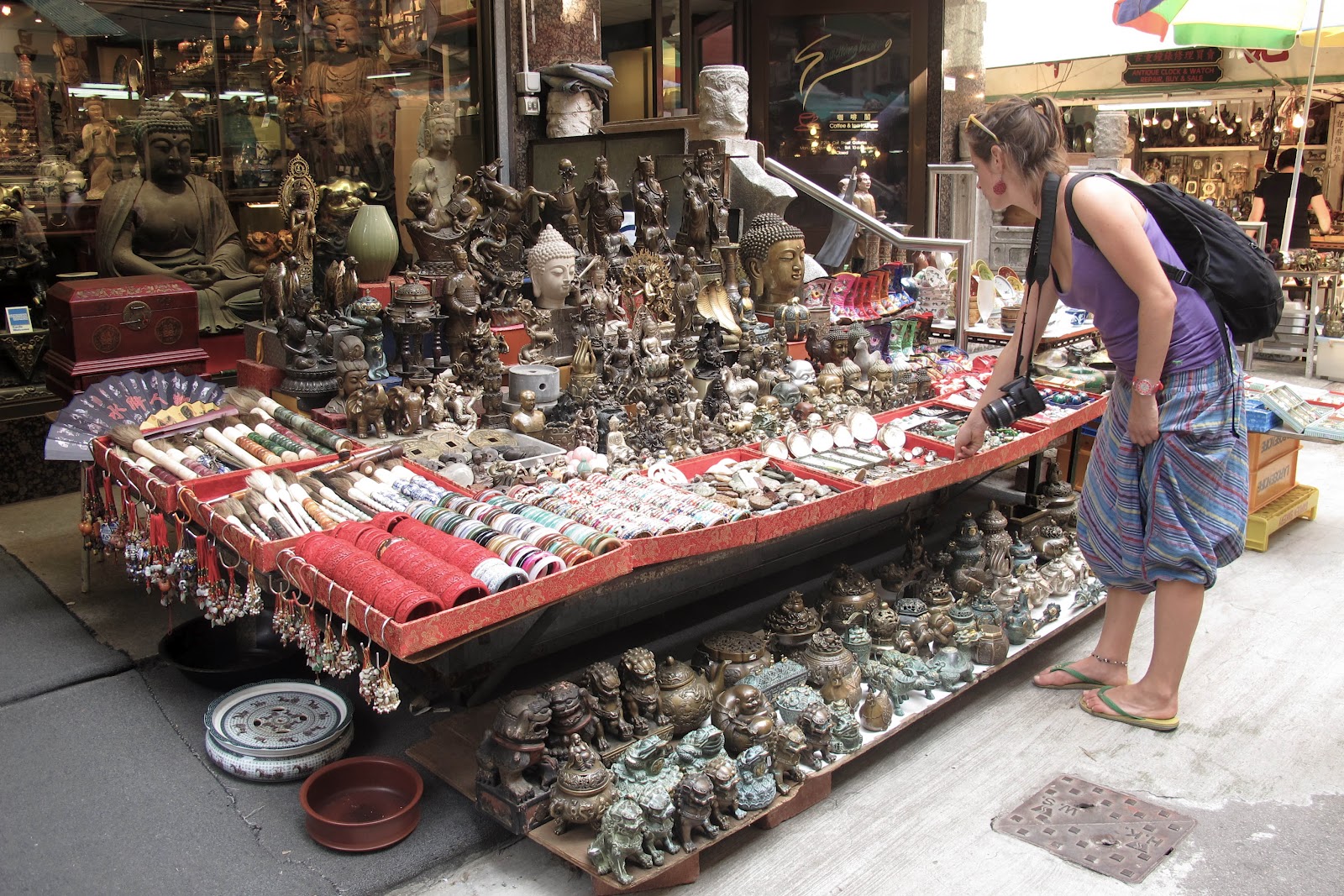
Wanering Around Hong Kong's China Town.
Luckily, we did not need visas, however we did enter Hong Kong the way most of the Chinese do – by taking a local train from Beijing to the border city of Shenzhen. Long walks through the hallways of the train station (which looked more like an airport) finally brought us to the immigration counters where we legally exited China and entered Hong Kong. On the other side and directly connected to the immigration offices we found ourselves at an entrance to the subway system, which connects you to almost any part of the country (we’ll call it a country, even though it is not). With its gigantic stations, underground and above ground sections of the railway, its super modern soundproof trains with TVs, perfect order and cleanliness, and a unique transfer system where in order to change lines all you need to do it just step out of one train and take another one across the platform going the opposite direction, Hong Kong’s metro is one of the most modern on the planet. In just over half an hour we were in one of the central districts – Kowloon, named after the peninsula where it is located.


Wandering Around Hong Kong Streets at Night. 
Beijing's China disappears completely as soon as you come out of the metro, replaced by a western city with the British legacy, which Hong Kong took advantage of to the maximum. It is true that almost all of traditional Cantonese architecture has been lost, however, this does not take away from the city’s charm inspired by the friendliness of the people, the general order and cleanliness of its streets, the well organized traffic, and the endless skyscrapers. With our mouths open and the eyes looking up into the sky, all we could think of was “Wow! We are New York!”. And yes, Hong Kong is the closest city to the American metropolis we have been to so far. The similarity is not only in the architecture, modern skyscrapers, and the busy crowds, but also in its geographical location. Hong Kong is comprised of the central island (Hong Kong Island) just like Manhattan; a continental area (The New Territories and the Kowloon peninsula) similarly to the New York neighborhoods of Bronx, Brooklyn and Queens, although the latter two are part of the great Long Island; and finally the islands (Lantau and Lama) just like New York’s Staten Island and the others.

Relaxing on one of the Hong Kong Islands.
These first impressions of “another New York” began to change in some respects once we discovered the city a little better. Hong Kong, despite being a big city with its abundance of concrete, steel and glass has protected areas that comprise 75% of the total area of ​​its territory. This means that more than seven million people of the country’s population reside on the remaining meager 25% of its land.  The district of Kowloon is the perfect example of this. In 1991 it reached a historical record of being the largest urban center with the highest population density on the planet (40,426 inhabitants per square kilometer), with 1,900,000 inhabitants living on the territory of only 47 square kilometers. Taking into consideration these numbers, nonetheless, there are many uninhabited areas and whole islands with deserted beaches, luscious forests and pristine quietness to enjoy whenever you feel like getting away from the craziness of the metropolis.

A Quiet Sunset on a Beach 20 min away from the City.
Hong Kong’s Victoria Peak is the place where you can get the best aerial view of what is the inhabited part of the island with its countless skyscrapers seeming completely unreal the way they illuminate the sky with its lights and colors. To get up there we used the famous 120 years old tram installed by the British in order to access their posh residences at the top of the hill. Getting down wasn’t as quick, as we decided to walk through this privileged part of town to get a better feel of what life could be if we were children of some rich Hong Kong Englishman. Amid the lush vegetation it was impossible to see any lights of the city and the silence was almost utopian interrupted only occasionally by birds’ chirping or the piercing sounds of cicadas. The narrow roads, taking us on this evening stroll through colonial English residences nestled between green hills, revealed only a few parked cars, none less in class than a Porsche, a Jaguar or a Rolls Royce. Gradually, the distant city lights began exposing the foliage of trees and in less than an hour we were back to dodging cars and buildings, with our feet on hot cement, and without a single tree in sight. The change was incredible and it was hard to believe that the same city could be so different so quickly.

Hong Kong Getting Ready for the "Symphony of Lights".
The skyline of Hong Kong alone has become one of the main attractions of the city. Organized by the department of tourism, a sound and light show called the Symphony of Lights, happens every night at 8pm and involves many buildings on both sides of the water - the Hong Kong Island and Kowloon. Dozens of dancing lights, lasers and reflectors rhythmically jump from one building to the other, some changing colors and some reproducing phrases on gigantic LED screens. Crowds gather on the Avenue of Stars to watch the skyscrapers become alive for some 15 minutes in a cheerful dance and then fall asleep for another 24 hours.

The City of the Go.
One of the strangest things about Hong Kong, though, was that it made me feel as if I were inside a videogame. Hong Kong highways and air walkways for pedestrians are completely surreal. As if taken directly from the “Need For Speed”, highways that go at ground level suddenly rise to heights of a 3rd or 4th floor, then go snaking between buildings and then cut their way directly through some skyscrapers. At the bottom they are lit with lights and lined with different materials making them look completely futuristic. There, if cars have their highways, pedestrians do as well. Footbridges, elevated to over 10 meters high, transport you between buildings and streets, take you through shopping centers and then deposit you in a completely different part of town. Sometimes the inclination of these bridges is such that they have escalators, which is the case of the one that takes you to the Soho area. With its 800 meters in length and 135mts of gradual elevation it is the longest outdoor escalator in the world. Walking for hours on end in these suspended gateways made me feel as if had been deposited in the middle of futuristic New York of “The 5th Element”.

Midair Walkways.
Thanks to Ting, a Singaporean girl  living in Hong Kong who hosted us for a few days in her 62 floor apartment on the island, we were also able to try Dim Sum (literally translated "order until heart’s content "), one of the favorite foods of southern China. Inside the restaurant there are many large round tables, which are shared by several diners, so you do not look for a table, but rather for a chair. Once seated, you are given a small paper with pictures and names where your orders are recorded as you ask for them. It is done this way because Dim Sum is not just a single dish. Female waitresses dressed in white circle around the tables with carts from which you choose what you wish to try. The variety of steamed buns, such as char siew bao (small bits of rice dough stuffed with different ingredients such as meat, chicken, pork, shrimp and vegetarian options) is enormous and all of it is absolutely delicious. The meal is always accompanied by green tea or Bolay (strong fermented tea) which is present on every table and is included in the price, so you do not have to pay for it separately. Many seniors come to these restaurants with their newspapers and spend hours and hours drinking tea, eating and chatting among themselves, although often barely acquainted only by sharing a Dim Sum table.

Hong Kong from the Victoria Peak.
Hong Kong was captivating and we felt like staying for a lot longer, because despite of its limited territory, the places we wanted to visit and the activities to do were endless. Nevertheless, the high prices and the time limitations made us move onto looking for new routes and destinations in Asia. The start of our exploration of the Indochinese peninsula was coming closer and closer, and the date of our departure for Vietnam was on the calendar. Thus, with the corresponding visas in our passports we left Hong Kong to begin what we call “The Final Stretch of the Expedition - Southeast Asia”.

Translated from the original article “La Nueva York del Oriente” by Emiliano Garcia.

15 dic 2011

UNITING THE WORLD

Derzhavnaia Church on Olkhon Island.
We were minutes away from our final stop on Olkhon Island, the biggest of the 22 islands of Lake Baikal, and also considered one of the most sacred places in Buddhist Asia. It was getting late and we needed to get to where we were staying that night before it was pitch dark and there was no one in the street. I called Sergey (our host on the island) to verify the address.
– Yes, the house behind the church. Just come on in! – replied Sergey.
5 minutes later I was knocking on the door of the house behind the gorgeous Russian Orthodox Church overlooking the steep hill cascading into Baikal. "Bon jour!" – was the response of a friendly blond lady, who opened the door and retreated to continue some table game with 2 children and 4 outdoorsy looking adults of different ages.

Emi and Yura with their pikes at the "Turbaza".
To put it mildly, we did not expect to find a house full of French travelers in the middle of Russian Siberia, especially not at this refuge-shack administered by a 30ish year old Russian church guardian. The lovely French found Sergey the same exact way we did – on Couchsurfing.com. I have heard about the site some years ago, when my old housemate (without consulting his roommates) opened the doors of our house to a Finish couple, who turned out to be wonderful and loved Washington DC. I never gave this idea much thought until Emi and I began our expedition. Emi, as it turned out, was registered on the site, but has never used it before. Since Latin America is cheap and with plenty of hostels we never thought of becoming active couch surfers until we got to Russia. Our first intention was to have a place to stay and save money on hotels, but once we had our debut with Ksenya in Krasnoyarsk, we became loyal converts.

Emi, Lisa, Marco and I in Terelj National Park, Mongolia.
It is basically a cultural exchange-meeting place for people who like to socialize. You can stay with people when you travel, you can host people at your home if you stay put, or you can just offer to hang out or show your local sites to the foreigners passing through where you live. At Ksenya’s in Krsnoyarsk, we learned that she loved hosting people just because it gave her a special spice in her daily life and she got an opportunity to practice English. She hosts people in her one bedroom apartment where the guests get the bedroom and sleep on mattresses on the floor, and she and her boyfriend do the same in the living room.  She has very little, but still she chooses to share that little with the fellow travelling souls that came through her nostalgic Siberian town.

Lisa in  our ger.
In the case of Sergey (college educated in Russia and France), he felt that it made him more connected with the world when he received people in his island house, especially if he could practice his French and English while showing them around.  When Sergey moved to the island some 6 years earlier to restore and revive the local church, there was no housing either for him or for any travelers. Little by little, him and his wife built a little log house and began thinking of a guest reception/cafeteria area, which every Russian church is supposed to have. Sergey did the thinking and couch surfers did the action.

Hong Kong - floor 62.
When Sergey began hosting people, everyone felt it was their duty to help with construction. As long as Sergey found building materials, the guest house did not stop to grow. When we were there, the structure was in place and only in need of insulation and interior beautification, to which we contributed almost every day of our stay. We also built a 15 meter long fence to protect the church grounds from the fierce winds ruling those lands. Every day when we returned to our new home after routine explorations of the island we (alongside with our French housemates) Iooked for new improvement projects. Just like at any other country-set household there is no end to activities and chores: there is wood to be split, garden to be weeded, shacks to be built and walls to be painted. No matter how cold it was, or how tired we were we did the work with great pleasure and felt that we were contributing to a common good that will stay and grow.

 Our hutong street in Baidjing
Our Severobaikalsk stay with Yuri was just as different and as fulfilling as the days with Sergey. Yuri, hosted people at his friend’s country camp, where he also lived for the time being. He was the only person from Severobaikalsk to host people, and he tried to accommodate everyone. Besides the excitement of meeting new people Yuri also “used” his guests to help him brain storm about tourism opportunities in northern Baikal where he was starting his travel company. Our contribution to Yuri’s new enterprise was in the form of photos for his website and a presentation video, which travelled to Moscow’s Young Entrepreneur’s competition which Yuri successfully won.

Chris is helping Emi to negotiate some deal in Mandarin.
There were many other stops along our way at the houses of great couch surfers. Liza from Germany, who hosted us in Ulan-Ude, became our dear friend and joined us on a trip to Mongolia where we spent a fun weekend in a ger of a local nomad family. Chris from Canada, “the master of Beijing hutongs”, taught us all there is to know about tea drinking and showed us how to do Chinese-style grocery shopping at the neighborhood market. Ting Yan from Singapore, who showed us the wanders of living on 62d floor in a Hong Kong residential neighborhood. The experiences that really stood out for us were the ones where we could help or contribute in one way or another, which always happened for us spontaneously and unexpectedly.

Anyone wants to start an export business: Beidjing-Moscow?
Since the beginning of our trip I have been looking for ways to help in places that we visited. The reality that I have discovered was that many volunteer projects have become an alternative way of travelling, where a volunteer has to pay a substantial fee in order to work for free. Administering volunteer projects takes time and effort and that is what the fee covers (they say). However, isn’t it ridiculous that your efforts to help are rejected if you can’t pay the fee?! It is the first time in my life when I have plenty of time and energy that I can and want to devote to helping this world, and I can’t find places where I can volunteer without having to pay for it.

Not surprisingly, Couchsurfing became for us the way to find people who needed help and who at the same time were willing to host us. It looks like Couchsurfing might become a new way to find real grassroots volunteering where it is still raw and clear cut: volunteering means donating your time and efforts to help those in need.

25 nov 2011

LA NUEVA YORK DEL ORIENTE

Carteles de Hong Kong
Es China? Es un país independiente? Es colonia Británica? La verdad es que incluso luego de leer e intentar tener una mejor noción y saber dentro de que aspecto se enclava Hong Kong, las dudas no se disipan, sino que crecen y nos dejan con más preguntas aun. Colonia Británica hasta 1997 (si… hasta hace muy poco), hoy Hong Kong es una “región administrativa especial” de la Republica Popular de China. Este sistema ideado por Deng Xiaoping, consiste en mantener un sistema económico capitalista (el cual se implementaba durante la época colonial), bajo la soberanía de un país de ideología comunista como lo es China. Además del sistema económico, Hong Kong mantiene un sistema administrativo y judicial independiente e incluso su propio sistema de aduanas y fronteras externas, por lo que los propios habitantes chinos necesitan un visado especial (y hasta hace un tiempo extremadamente complicado) para entrar en territorio hongkonés.

Pasarelas y Autopistas
Para hacer más económica y más divertida la entrada a Hong Kong, tomamos en Beijing un tren local que nos depositaba en Shenzhen, la frontera misma con la “región administrativa especial”. Largas caminatas por los pasillos de la estación de trenes (más parecida a un aeropuerto), nos llevaron a las ventanillas de migración para salir legalmente de China e ingresar a Hong Kong. Al otro lado, y directamente conectado con migraciones se encuentra el metro, el cual conecta a casi la totalidad del país (lo llamaremos país, aunque no lo sea). Gigantescas estaciones; tramos tanto subterráneos como sobre tierra; trenes súper modernos con televisores y una insonorización que parece imposible; orden y limpieza; y un sistema de combinación única, en donde para cambiar de línea basta con salir de un tren y subirse al que viene del otro lado del andén, hacen del sistema uno de los más modernos del Planeta. En poco más de media hora estábamos en la península de Kowloon y distrito del mismo nombre.

Atardecer en Stanley
Al salir del metro, desaparece completamente la China de Beijing y aparece una ciudad muchísimo más occidental, con la influencia británica a la vista y un legado que los hongkoneses supieron aprovechar al máximo. Es verdad que se perdió casi por completo la arquitectura cantonesa, pero el orden, el transito, la infinidad de rascacielos y la educación y amabilidad en la gente no es para nada despreciable. Tanto Vale como yo nos miramos y dijimos “esto en New York”; y si, es lo más parecido a la metrópoli americana, no solo en arquitectura moderna repleta de rascacielos y cemento, en las enormes cantidades de señalizaciones para el tránsito y en esa loca sensación de caminar siempre mirando hacia arriba, sino también en su disposición geográfica, constando con un centro insular, como lo es Hong Kong Island (lo que vendría a ser Manhattan), y una zona continental, como son los nuevos territorios y la península de Kowloon (en parentesco con el Bronx, Brooklyn y Queens, aunque los dos últimos son partes de la gran Long Island) e islas como Lantau y Lama, emparentadas con Staten Island.

Lama Island
Estas primeras impresiones y coincidencias con Nueva York, apenas emergidos del metro, luego cambiarían en algunos aspectos. Hong Kong a pesar de ser una gran ciudad con infinidad de cemento y rascacielos, posee también zonas protegidas y selvas que constan del 75% de la superficie total de la región, lo que significa que sus más de siete millones de habitantes residen en tan solo el 25% restante. Un claro ejemplo de esto es el distrito de Kowloon, que en 1991 alcanzo el record histórico de ser el núcleo urbano con la mayor densidad de población del Planeta con 40.426 hab/km2; osea 1.900.000 habitantes en sus tan solo 47km2 de extensión. Pero en contraposición a estos datos, abundan las zonas inhabitadas y muchísimas islas, a las cuales se llega en tan solo algunos minutos de ferry, donde se puede disfrutar de playa, mucha vegetación y soledad, contrastando 100% con la gran urbe de cemento hongkonesa. Por otra parte, hablando de edificaciones históricas, que en Hong Kong prácticamente no existen, en New York, la mayoría de los edificios datan de principios del S.XX, donde el propio icono del Empire State ya cumplió 80 años de vida. Así y todo, la sensación que da recorrer Hong Kong es muy similar a la de la metrópoli americana.

Pico Victoria, Hong Kong y el Tranvia
Desde el Pico Victoria, se puede obtener una vista aérea de lo que es la parte habitada de la isla y sus incontables rascacielos que parecen irreales, con sus luces de colores apuntando al cielo. Para ascender allí utilizamos el famoso tranvía, de más de 120 años, que instalasen los británicos para acceder a la parte alta de las montañas, pero para bajar, preferimos hacerlo caminando. En medio de la gran vegetación es imposible divisar luz alguna de la ciudad y los estrechos caminos solo nos llevan en un paseo a través de residencias inglesas coloniales enclavadas entre el verde del cerro donde sus estacionamientos no tienen menos que un Porsche, un Jaguar o un Rolls Royce y el silencio que se practica es prácticamente utópico, interrumpido solo por algunos pájaros o grillos nocturnos. De a poco las luces se van dejando ver entre el follaje de los árboles y en cuestión de no más de una hora estamos nuevamente esquivando autos y edificios, con los pies sobre el cemento caliente y sin ver un árbol a la redonda.

Skyline Hong Kong Island
Y es que el skyline de Hong Kong se ha convertido en una de las atracciones turísticas de la ciudad; tal es así que el departamento de turismo organiza un espectáculo de sonido y luces denominado Symphony of Lights, en el que participan muchos de los edificios tanto de la isla como de Kowloon, los cuales a partir de las 8pm de cada día, danzan al compas de la música encendiendo y apagando luces y reflectores, algunos cambiando de color y disparando láser verde y otros reproduciendo frases e imágenes en gigantescas pantallas de led. La gente se amontona en la Avenida de las Estrellas para ver como los rascacielos cobran vida por 15 minutos y bailan para nosotros del otro lado del rio.

Pasarelas y Autopistas
Algo que me pareció completamente de video game, son las autopistas y las pasarelas aéreas para peatones. Como si se tratase de estar dentro del Need For Speed, las autopistas que van a ras de la tierra, por momentos se elevan a alturas de un 3er o 4to piso, y esquivando rascacielos se insertan entre los edificios, algo que parece completamente irreal. En la parte baja son iluminadas y revestidas con diferentes materiales que las hacen una parte más de esta maqueta viviente y futurista de Hong Kong. Pero si los autos tienen sus autopistas, los peatones también. Pasarelas elevadas a más de 10mts nos transportan entre edificios y calles, pasando a veces por shoppings y variando su altitud en más de una ocasión. A veces su inclinación es tal que poseen escaleras mecánicas, tal es el caso de la que sube a la zona de Soho, la cual con sus 800mts de largo y un ascenso de 135mts es la más larga escalera mecánica al aire libre del mundo. Uno puede estar quizás una hora, caminando sin tocar tierra firme, recorriendo la ciudad suspendido en estas pasarelas que a veces me sumergen en la Nueva York futurista del 5to Elemento.

Tranvias de dos pisos
Gracias a Ting, una singapurense que reside en Hong Kong hace unos años y nos hospedo por unos días en su apartamento de la isla en el piso 62, también pudimos disfrutar y ver de qué se trataba el Dim Sum (traducido “ordenar hasta satisfacer el corazón”), una de las comidas predilectas del sur de China. Dentro del restaurante abundan las grandes mesas redondas, las cuales son compartidas por varios comensales, por lo que no hay que buscar una mesa, sino una silla. Ya ubicados nos dan un pequeño papel con cuadros y nombres en cantones donde serán anotadas las cosas que pidamos para comer. Es que el Dim Sum no es un solo plato. Hongkonesas vestidas de blanco circulan alrededor de las mesas con carros , de los cuales uno va eligiendo que cosas degustar. La variedad de bollos al vapor, como el char siew bao, pequeños bocados de masa, y arrollados de arroz, que contienen diferentes ingredientes, como carne vacuna, pollo, cerdo, camarones y opciones vegetarianas, es muy grande y todos; completamente todos los platos son exquisitos. A esto se lo acompaña siempre con te verde o bolay (te fuerte fermentado), el cual no falta en ninguna mesa y está incluido en el precio, por lo que no hay que pagar por él. Muchísimos ancianos se acercan a estos restaurantes con sus periódicos, y pasan horas y horas tomando té, comiendo y charlando entre ellos, aunque casi siempre no se conozcan más que por compartir la mesa.

Calles de Hong Kong
Hong Kong da ganas de quedarse a recorrerla aun mas, porque a pesar de lo escaso de su territorio las opciones son infinitas, sin embargo, los elevados precios y el tiempo nos hacían movernos y buscar nuevos rumbos dentro de Asia. Nuestro comienzo con la península de indochina era inminente y Vietnam aparecía cada vez más cerca en nuestro calendario. Así, ya con los visados correspondientes pegados en nuestros pasaportes, dejamos Hong Kong para iniciar lo que denominamos la recta final de la Expedición; el Sudeste Asiático.