Mostrando las entradas con la etiqueta vietnam. Mostrar todas las entradas

28 ago 2012

A ROAD TRIP THROUGH NORTHERN VIETNAM - Part 2


Day 3: Thuan Chau – Dien Bien Phu: 136 km, 4 hs.

Good Morning Vietnam!
Our plan for day 3 was to cover some 140 kilometers almost to the border with Laos and spend the night in the town of Dien Bien Phu. It is known for a significant battle that took place around there in 1954 the result of which was the expulsion of the French rule over the north of Vietnam. Since we had plenty of time and a relatively short distance to cover for the day we took time stopping many places to photograph the luscious landscape that was becoming more mountainous and wooded. There were fewer villages around those parts, but every time we saw villagers they were busy with some sort of agricultural activity – gathering rice, carrying or cleaning crops on tarps spread along the road. 

Photo Lessons...
The kids often road water buffalos alongside the road or zipped around on bicycles (2-5 people on 1 bike) way too big for their size. We saw several women who were “transporting” their pigs by walking them on a leash from one place to another. Those villages, situated along the road, were obviously not isolated from the rest of the civilization, but it felt as if they were entirely self sufficient. Every household had a pond where they raised fish and eatable algae and other water plants eaten as salad. They all had cattle, chickens and cultivated their own rice. I am sure that the real situation is not that ideal, but it really felt that those people lived independently relying only on themselves and their land.

A Girl from Sapa.
By 1pm we were almost at our final destination and it was time to eat. When we set out on our trip we were told to respect Vietnamese meal times because otherwise we were not going to find places to eat. Lunch is usually eaten between 11am and 1pm after which most eating establishments close and only reopen for dinner between 6 and 8pm. This time our lunch turned out to be a full on multiple course meal culminating with traditional green tea and pipe smoking. We were hosted by an ethnic family, who did not question whether or what we wanted to eat, but just began feeding us.  Skillfully, they made sure to get our heads spinning with the rice liquor and our bellies full with the fresh deliciousness of no less than 6 dishes during a couple of hours of intense conversations through hand gestures. The whole feast ended up costing a ridiculous amount of $10 after which we could not summon up for anything except for finding a hotel and taking a 3 hour nap.  


a
Limestone Mountains...
Day 4: Dia: Dien Bien Phu – Lai Chau: 212 km, 8 hs.

This was one of the longest days we had on a bike and I was not feeling too happy about it. As the landscapes were getting more and more stunning, my butt was getting more and more sore. We took several stops during which I had to take short naps to try to get some strength back, but it seemed that my body was refusing to take any more time on top of that thing. Emi did not feel the effects as much, but I think it was because he was the one driving, and being in control took his mind away from his pains and aches.  Thankfully, the scenery was gorgeous and diverse with plenty of things to distract ourselves with.

On Their Way to the Rice Fields.
Alongside the road we were on there was a steep wall of a limestone mountainous formation completely covered with a green carpet of voluptuous vegetation. The other side of the road dropped down to a wide turbulent river the color of milk chocolate. There were strange looking wooden boats with some sort of sheds floating in many places. Those boats, as we later found out, were gold-digging vessels that sifted through the river bottom residue in search of this precious metal. As we moved farther and farther north, we noticed that traffic almost dropped completely up there and it was almost strange to come across a random truck of another motorbike. Apparently, the north of Vietnam is less populated and people have fewer resources to contribute to long distance traffic.  

Yummm!
As always, we stopped for lunch at a place that appeared the most popular with the locals. We walked in and were immediately offered to try someone’s dish – an unknown something looking like a pile of golden French fries. Emi put one of those things into his mouth and immediately ordered that dish for our table. Little did I know that in some 5 minutes I was going to be facing a challenge of eating a plateful of giant deep-fried maggots and flies! OMG! The flies had wings and everything!  If I knew what we had ordered this would have never happened, but now, with the whole place staring at us we had to eat them… I am not picky about my food and my stomach is very strong, but I did feel it turn when I grabbed one of those crispy flies with my chop sticks. Of course I had to prove to myself, Emi and everyone else that I could do it….and I ate one fly and one maggot (yuck!!!).  They do taste like fried food and they fill you up, but I would not be eating them any time soon again.

 Just Another Day in the Mud Pool!
Our adventure for the day was not exactly over with the insect lunch. Once we finally got to Lai Chau, I was desperate for a shower and a bed. We found a beautiful room at a family hotel and were ready to settle in when the owner asked us for our passports to register. 5 minutes later he showed up in our room telling us that we had to leave…Since no one at the place spoke English we never found out what happened and why we were being kicked out. Our only guess was that guests with US passports were not welcomed there. The north of Vietnam is still very communist and the memories of the Vietnam War are still too fresh in the older generation’s memory. In general, the Vietnamese are very friendly to anyone and we have not heard any stories about animosity towards US visitors. However, I would not be surprised if that man refused to extend his hospitality to visitors from the nation that did horrors to his homeland and his people.

Day 5: Lai Chau – Sapa – Lao Cai: 157 km, 5 hs.

Villages Around Sapa.
This day we saw some of the most beautiful landscapes and some of the ugliest manifestations of “cultural tourism”. We were now in the mountains of Vietnam and the whole way to Sapa we were climbing up the curvy mountain roads. In many places the roadside slopes were covered with a green carpet of a plant called Xuxu. It is a pear-like wrinkled green vegetable that grows on vines. The plants are grown on hillsides over some sort of an elevated wood and wire platform that supports the vines providing for space to walk underneath the growth and collect the hanging fruit. We have eaten Xuxu many times, as it turned out, but just did not know what it was. It is used for salads and stir fries and it is delicious!

An Indigenous Woman in Some Village. 
By noon we were approaching Sapa, which is a small town on top of a mountain and surrounded by countless hills ornately carved by rice terraces. In the last years it has become a very popular destination for so called “cultural tourism”, when you are offered to visit local villages and get acquainted with a traditional way of living of the native population. Predicting the crowds and the exaggerated prices we had planned to spend an afternoon in Sapa, but find accommodations for the night at a different town further down the road. As soon as we entered Sapa we were happy about our decision as the streets were flooded with white visitors and herds of indigenous locals harassing them. Most of them offered beautiful handcrafted goods or guided walking tours though the surrounding villages and elaborate rice terraces.  

Unfortunately, any interaction with the local people turned out to be negative. Emi went to the market square to look at the crafts and within seconds he was surrounded by at least 20 women shoving their crafts into his face and shouting over each other to get his attention. 
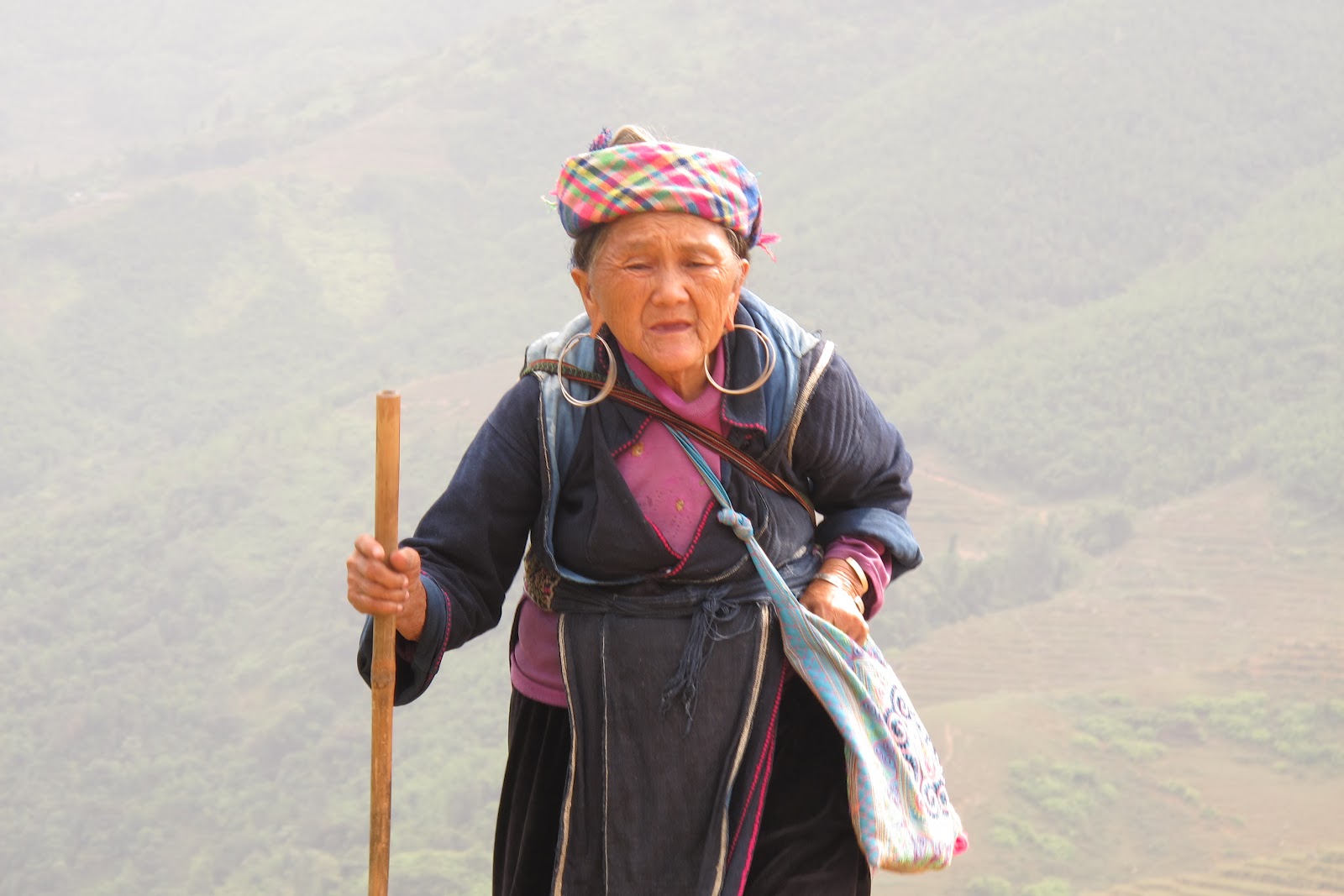
A Woman from Sapa.
The worst part was that they fought with each other and did not respect each other’s prices or priority as far as making contact with a particular tourist. It was also practically impossible to “shop around” and check out prices because as soon as you asked “How much?” you were expected to buy the thing no matter what, and if you tried to leave they physically blocked your way! This was the worst harassment I have ever experienced and it was really sad because it made you want to run from the place that is amazingly beautiful, with rich history and nice people (I am sure).  It really felt like “cultural prostitution” the way those women used their traditional clothing to get your attention and then sell you anything from what they wore or owned.

Another Indigenous Woman Selling Crafts. 
 It was very sad and unpleasant, but this is Sapa’s reality which was created by the western visitors. So we are to blame ourselves for wanting to see exotic beautiful places and people, and creating mass tourism to these places. We are the ones who change the traditional life style in places like Sapa, and now we are the ones who criticize the locals for losing their authenticity and trying to make money off of us?!

Luckily, our visit to Sapa was soothed by a visit to a small local bar with refreshing beer, super friendly owners and plenty of paint to add our contribution to the decoration of the place. Having replenished our forces and done with sightseeing for the day we left for Lao Cai, which was going to be our last stop before heading back to Hanoi.

A Village Woman somewhere before Sapa.  
Day 6: Lao Cai  - Hanoi: 354 km, 8.5 hs. 

The last day was going to be the longest day riding and the poorest one in attractions. This time, the goal was not to see things but to get to Hanoi as soon as possible and in one piece. We actually had an option to avoid driving the bike back and take a train, but that, of course, was an ungrounded extra expense for our budget. So we got up and drove… all day long! It was not particularly interesting and exciting, as we were on one of the main highway routs in the north, but because of that we saw more exciting atrocious variations on driving Vietnamese style… There were people on motorbikes carrying slaughtered pigs, cages with chickens and dogs; there were cows, buffalos and people walking on the highway; we had to swerve around a bus going backwards in our lane; but the best was a heavy-duty commercial truck parked on the actual road while the driver was having lunch.  Nevertheless, as always, we never saw one accident and no one appeared stressed about traffic.

A Perfect Turn on the Road!
By 6pm we were back in Hanoi, which met us with its usual energetic chaos. Very tired but reenergized emotionally by our new tip experiences we returned the bike, arranged a new adventure for Hallong Bay the next day, picked up our big backpacks from our old host and dripped them of at the house of our new hosts - this time 4 French university students. They were very new to Vietnam, so just like that Catalan couple, we were now the ones sharing our road stories and inspiring the newcomers not to stick to established tourist routs and get on those bikes to explore the country for themselves...

1 ago 2012

A ROAD TRIP THROUGH NORTHERN VIETNAM - Part 1


Rice fields in Mai Chau.
This road trip was something very special in our year of traveling. This was probably one of the most authentic experiences we have had traveling.

Emi and I were sitting in a gloomy hotel of the capital of Mongolia waiting for my Chinese visa. As I was making dinner I noticed that Emi was in a very lively conversation with a couple looking very Spanish. They turned out to be Catalans on their back home after more than a year of traveling. The conversation was move like a river of information being poured over Emi about a must do motorbike tour in Northern Vietnam. Martina and Sergio told us how that impulsive trip ended up being their favorite part during their whole 12 months of wandering around the world. Needless to say, Emi was sold on repeating this journey as soon as he heard the stories of deserted mountainous roads, hundreds of indigenous villages on the way, valleys of rice fields and no white foreigners around.

A Rest Stop Somewhere.
Once in Hanoi, we were into the preparations for the trip. Ironically, it turned out that Katya, our host in Hanoi, knew all about independent moto trips through the north as her ex-boyfriend was the owner of a motorbike rental place that set up most foreigners with all the necessary gear and information. The Catalans rented their motorbike form the same guy as well. The trip was going to be a little over 1000 kilometers that we were hoping to cover in 5-6 days. It could have been much longer if we decided to continue on and explore the north of the neighboring Laos, but at the time we decided that a 6 day loop was going to be enough of an adventure.

Day 1: Hanoi – Mai Chau: 188km, 6hs.
On the Way Home from School.
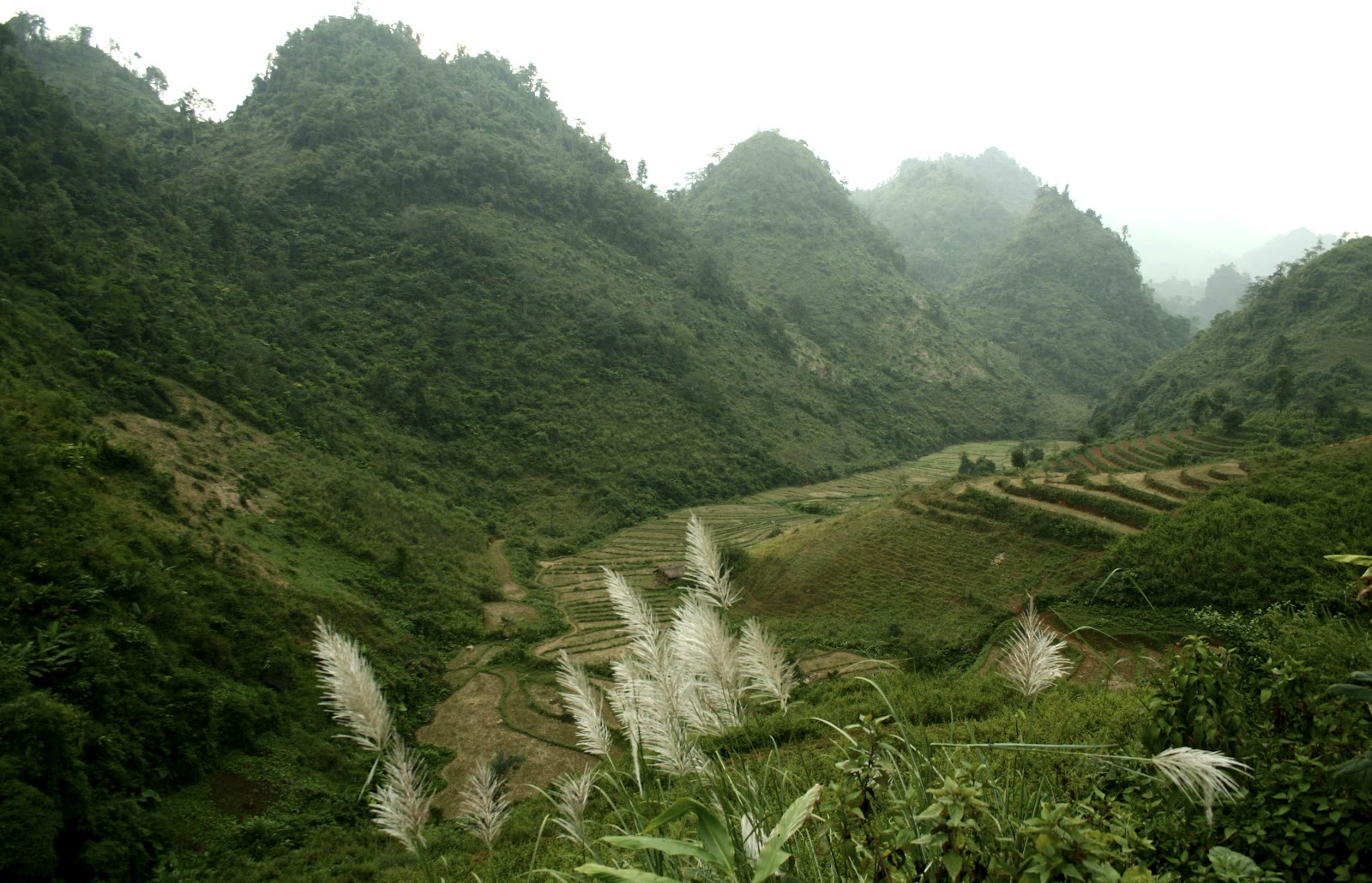
Leaving Hanoi was easy, but long… Everyone drives at the speed of 5km an hour and there is traffic of all kinds at all hours. We left early to avoid the peak of congestion, but that did not help much. Nevertheless, thanks to Emi´s amazing navigation skills we did not get lost once and eventually got out of Hanoi in the right place. Our first overnight stop was planned for Mai Chau, some 100 km southwest of Hanoi. We got there a few hours before sunset, which was not exactly planned this way, but worked out perfectly because the place is absolutely stunning and it would have been a huge loss not to be able to document it in photos. The place is known for its traditional tall stilt houses spread over luscious rice fields. In the golden pre-sunset light the village and the valley looked as a perfect scene from National Geographic. The people turned out to be also extremely friendly and welcoming, even though it is very touristy. Mai Chau is the closest traditional Vietnamese village to Hanoi, so busloads of farang tourists are delivered there daily. The Catalan couple, as well as many other independent travelers, prefer to stay away from such touristy places for this reason, but we felt that following this logic we would be robbing ourselves of seeing some of the most amazing places in the world. So, despite the white grandmas walking along narrow dirt village paths, we were happy we did not skip Mai Chau. It was surreally beautiful!

Rice Harvest.
Despite its popularity with tourists, the village still lives by its agricultural traditions. When we arrived, it was harvest time and we got to see how rice was separated from its husk and hey. Most of it was done manually by beating the rice plants against the ground and stepping on it, or with a mechanical beating machine, which is operated by a pedal, much like an old pedal-operated sewing machine. Sometimes a few families collectively rent an industrial electrical device to process their rice, but since we did not see much of it, it must be expensive for the farmers, so most of the rice is planted cared for, harvested and separated manually!

Some Local Ladies.
Another reason why we wanted to go to Mai Chau was because we wanted to stay with a Vietnamese family and learn a little about their life and the way they do things. We did not have to look for a place to stay as the first guy who appeared at the entrance of the village persuaded us to stay with his family. The stay also included a dinner and a breakfast, which was just perfect. The meals in Vietnam always consist of rice accompanied by multiple dishes served for everyone to share. The individual plates are not really plates, but are small bowls which you refill several times during the meal. The utensils are chopsticks or hands. Fruit is commonly eaten as a desert and as a breakfast treat. Breakfasts, as we know now, doesn´t really exist in South East Asia. For them, breakfast is just another meal that is eaten early in the morning (around 6 am), and so it can be a traditional bowl of noodle soup, rice with vegetables and chicken or meat. It is all very delicious, but in the morning…I still prefer my croissants or a toast with cheese!

Day 2: Mai Chau – Thuan Chau: 217km, 7hs.
New Lunch Friends.
With our stomachs full and our butts sore from not being used to spending hours on end on a motorbike we were off. Our goal for the day was to cover some 200 kilometers and spend the night in the town of Thuan Chau. I thought that the farther we got form Hanoi the less populated the countryside was going to get. However, I forgot that we were in Vietnam – one of the most populated countries in the world, with almost 90 million people spread throughout its country side. There were villages along the road almost everywhere. Some looked like small towns and others were just a collection of several wooden huts planted in between fish ponds and rice fields. We also noticed that among the working in the fields there were never children, unlike in some parts of Latin America. We saw them helping out the adults later in the evening, but during the day they were all in school. It appeared that there was a very strong emphasis on education in Vietnam and teachers were very well respected in the society.

In between Villages...
Little by little we began noticing that people were looking differently from one village to the other. We began seeing people wearing characteristic traditional dresses that distinguished them from the natives of the other surrounding villages. Some had long velvet skirts with bight color belts, some wore Andean-like colorful multilayered skirts and embroidered tops, others had special head wear pieces and distinctive hairdos. It was not surprising to me how many different types of ethnic minorities that we saw, but I was shocked at how closely they lived to one another, and how they all coexisted without visible conflicts and animosity. To us, the people were always very friendly and welcoming. Every lunch stop turned into a story of meeting the whole family of the restaurant owners; or some game with the local kids; or a drunken celebration of life with the local field workers, who took their time to enjoy the food, each other’s company, and telling us (in Vietnamese) about their lives. 

30 abr 2012

VIETNAMITAS-DINAMITAS


Traffic Jam!!!
There was no direct bus from Hong Kong to Hanoi, Vietnam, contrary to what Emi has been telling me. Luckily, we cleared that out before getting into China and got ourselves double entry visas for that country.  From Hong Kong there are only 2 options as far as getting into Northern Vietnam – going through southern China or flying. As you might imagine, flying was totally unacceptable for our budget, so it was bus or bus via China. It was going to be our first over-night bus trip, and what a joy it was to experience it with a Chinese transport company. It was paradise compared to all the other “sleeper buses” we took in South East Asia. The bus was new, spotlessly clean, and had real double deck beds wide enough space to accommodate 2 people! It also turned out that the roads in Southern China were very nicely paved and without much turns and curves so it didn’t feel like we were on a bus at all, which presented a perfect opportunity for watching a movie on our little Acer.

A Mobil Fruit Stand.
A movie and a few hours of sleep in we were at the Vietnam border. The border crossing was like any other, but the immigration control and the actual passport stamping was something special… First of all, you have to make it to the little window to hand in your passport, either by waiting in line, or just pushing your way through, as if the rest in line did not exist. Once at your target, somehow you start doubting if it is a good idea to turn your passport in because what you see through the window is a mountain of passports of all colors being stamped and passed over in all directions. You are supposed to submit your passport and wait at the other window where it is supposed to appear with all the necessary stamps and visas. Passport control, as most of us know, also implies “face control” where they match your passport photo with your actual face. Well, not in Vietnam! What matters is a passport and the entry fees you have paid, and there you go! Magically, our passports were into the chaos and back out and in our hand in no more than 30 minutes. The magic here must have had some connection with Emi’s 3 month beard. Contrary to Russia, having a beard and lots of body hair in Vietnam automatically makes you a super star. The Vietnamese of all ages and genders were staring at Emi with approving looks and fascinated smiles on their faces. They must have expedited out passport quickly and into the right hands just out of respect for his abundant hairiness!

Vietnamise Style U-HAUL.
Heading down to South East Asia we, of course, knew that accommodation, among other things, was very cheap there. Nevertheless, we were determined to continue with our couchsurfing home stays. This time, it was Katya from Ukraine who opened her doors for us. Katya, like many other expats in Vietnam, was an English teacher. As we learned later on, life as an English teacher in Vietnam is pretty sweet, with nice salaries and a prestigious social status. So, it is no wander that herds and herds of travel enthusiast, adventures and all sorts of cold hating white folks flock to Vietnam to spread the lingua franca of the current times. Somehow, this communist country places quite an important role on getting its population to master English. There is a great demand for English teachers and they are treated very well in Vietnam.

Farangs at Dolche Vita, no Less.
Nevertheless, despite the abundance of English schools and farangs (or gringos, or white foreigners) the Vietnamese don’t really speak English. I should correct myself, they all do try to speak it, but what comes out of their mouths is impossible to understand, so there is lots and lots of work for anyone whishing to try themselves in the education field. Weeks after our first entrance into Vietnam we were explained the basics of the Vietnamese language, after which it made it much easier to understand why the poor Vietnamese cannot, for the life of them, get their English sounding like they are speaking English. In Vietnamese, half of the consonants, that are perfectly normal to us, simply do not exist, and the Vietnamese can’t distinguish the sound of those consonants. So, for example, v, f and p sound the same to them!

Coca-Cola Delivery Truck.
Listening to all sorts of crazy expat stories while sipping another one of the 25 cent “bia hoi” bears I couldn’t stop thinking about our DC family’s dear friend Leo, who lived in Vietnam for 4 years. The whole time that we were in Vietnam, I saw Leo in every fair-skinned farang drinking a beer, eating a bun cha, or zipping around on a $5 per day rental motorbike. One time, I asked Leo why he left Vietnam, and he said: “I was going crazy, I had to leave”. I can only imagine the kind of trouble my dear friend and the rest of the farangs got and get into in Vietnam with all the money and the freedom of the young years on their hands… Oh my! The crazy mix of everything in the streets only hinted of the chaos Hanoi lifestyle could be.

A Mobil Coffee Shop.
There were motorbikes everywhere and you never knew if the drivers actually knew how to drive them. As we found out, in order to rent a moto all you need is $5 to pay for it. No one is going to ask you for driver’s license, insurance of anything of the sort. I read somewhere that all international drivers license are actually illegal and are not accepted in Vietnam and Cambodia, but in reality, no one cares about any drivers license, and the police are usually afraid to deal with the farangs because they don’t speak English. Most of the locals also don’t have any kind of license and many even drive bikes without any license plates! But again – anything goes in Vietnam. Things like, transporting on a 2 person motorbike a cargo of 10 cages full of live chickens; a live pig; a dead pig; a stack of crates full of beer and coca-cola; a sheet of glass for a storefront; an entire kitchen and a kiosk to sell the goods at any stop; 4-5 people, some of them holding I.V. bags for the others (it is true!), and so on...


A Corner Restaurant.
Surprisingly enough, accidents happen a lot less frequently in Vietnam as one would expect. Once we have gotten a “steel horse” of our own, we realized that one of the reasons for that was that everyone drives very slowly there. It is perfect for when you are learning how to drive a bike, or when you are doing some sightseeing, but not when you are trying to get from point A to point B. However, the biggest challenge is probably not the speed, but what you might encounter on the road. While on a highway (or something of its equivalent) you might see people driving in the opposite direction in your lane; people doing a U turn in the middle of the road; water buffalos, cows and pigs crossing your way, or taking a little siesta; and of course, lots and lots of Vietnamitas-Dinamitas (as Emi likes to call the Vietnamese) all wearing air masks, and some sort of pajama looking protective jackets.

Taking a Little Siesta.
Hanoi, like most other Asian cities, is famous for its bad air quality, however, I have discovered that it can easily compete with Moscow, or Buenos Aires for example. To me, the air in Hanoi did not feel any dirtier than in any other big city. It is just that the Vietnamese feel that it is essential to wear a face mask (and often an all covering pajama-style jacket) in the city to try to protect your lungs from all of the dust and pollution you breathe in otherwise. It certainly looks very strange and involuntarily makes you feel nervous, as if you were in the epicenter of a major epidemic area. Nonetheless, I think they are doing the right thing by trying to protect themselves, and more often than not I feel like wearing a facemask on the overcrowded streets of Buenos Aires where fumes are literally choking during peak hours.

My Favorite Squid Stand.
Pajama fashion is a special phenomenon in Vietnam that deserves a special note. First, I thought that all of the pajamas that I was seeing all around us were out and about because it was an early morning hour. As the day went on, though, the outfits did not change, and the women of all ages continued parading around their multicolored and diversely designed pajama suits. From day to day they changed them, as one would change regular clothing, which indicated that the pajamas were their regular clothes. I never found out where this latest fashion came from and how it became widely accepted, but it was definitely entertaining to find yourself surrounded by pajama fashionistas in the middle of a huge metropolis.

No Worries! Trains don't Come Very Often.
Even though Hanoi is a big city it doesn’t feel that way, despite the never ending chaos in the streets. To me, the reason why it didn’t feel like a big city was because the people continue living the way they live in the villages – with all activities happening in the street, in font of their houses. In fact, in many houses the street is an extension of their living rooms. In most houses, the façade part of the building at the ground floor is a wide garage-like gate that stays open the whole day, as the inhabitants go on with their home lives in the living room space – eating their meals, watching TV, playing with children, or arguing. In some houses, the front entrance is blocked by an abundance of very low plastic table and chairs, which serve as restaurant seating. In Vietnam, most of the people eat in the street, since the food is really cheap and is available 24/7 on every corner.  We discovered that the low seating was not something exclusive to impromptu house restaurants, but was the way/ level at which the Vietnamese did everything. Somehow, for them it is more comfortable to prepare dinner, wash dishes, or do anything else in a squatting position, rather than to do it all standing at a normal size table.

PJs Galore!!!
It was all very different and very exotic and I constantly felt like I was in some parallel world where everything was done in a strangely distinct manner that I never knew existed. These few days in Hanoi ware like a brief introduction for what we were about to experience in those last few months of our trip. South East Asia was opening its doors for us and we were eyes and ears trying to absorb and understand what it was all about. 

10 abr 2012

LA VIDA EN EL DELTA

Solitaria por el Delta
Existe un grupo de ríos a los que se le llama hermanos. No por compartir las mismas tierras, ni por encausarse en algún momento, sino por poseer entre si, cualidades que los hacen únicos e indispensables en el desarrollo de la vida en cada una de sus regiones. Sus orillas fueron las primeras zonas habitadas de cada continente y sus deltas el corazón para la pesca y la agricultura. Entre ellos se destacan el Misisipi en Norteamérica, el Paraná y el Amazonas en America del Sur, el mítico Nilo en África, y el rico y turbio Mekong en Asia. Con sus orígenes en la meseta tibetana China, en las alturas de la cordillera del Himalaya, sus causes descienden de norte a sur haciendo de frontera natural entre Laos y Myanmar primero y Tailandia unos kilómetros mas tarde. Apenas metros antes de ingresar a Camboya logra su mayor anchura (14 Km.), y es en dicho país donde las inundaciones en temporada de lluvia hacen de sus tierras aledañas una de las zonas más fértiles de Asia para el cultivo de arroz. Pero es en su agonía, antes de mezclarse con el agua salada del Mar de China, cuando un delta de mas de 40.000 km2 de superficie le cambia la vida a millones de personas que entre ríos e islas viven sus vidas en el sur de Vietnam, país que recibe las cansadas aguas del Mekong luego de 4.880 Km. de viaje asiático.

Sandias
Desde que decidimos conocer el delta que dudábamos en como hacerlo. Como ya habíamos experimentado, los tours vietnamitas debían ser siempre evitados, pero una región tan amplia y complicada de transitar como un delta repleto de islas y canales, no nos daba demasiadas opciones. Decidimos tomar un tour de solo un día, y que no nos traiga de vuelta a Saigón, sino que nos deje en la ciudad de Can Tho. “Ahí no van a conseguir nada” nos decían, a lo que les contestábamos con toda la seguridad que no teníamos “no se hagan problema, traemos carpa”, como si la fuésemos a armar en el medio de una avenida. Así fue que luego de la recorrida del día al estilo club de jubilados y con un guía que le entendíamos mejor el vietnamita que el ingles, nos dejaron finalmente en la puerta de un hotel, donde sea como sea, debíamos evitar quedarnos si queríamos conocer un poco mas el corazón del delta. De alguna manera nos entendimos con el guía y nos paso el teléfono de Hung, un hombre que según el hospedaba gente en su casa a orillas de uno de los canales del Mekong.

Vendedora de Pijama
Por suerte el ingles de Hung era el mejor que conocimos en Vietnam, y luego de unos 25 minutos en moto y unos tantos kilómetros por callecitas de tierra que cruzaban varios canales, llegamos a su casa gigante, repleta de cerámica y escasa de muebles, a metros del agua marrón y turbia del río. Nos acomodamos en una habitación al lado de la cocina, y rápidamente comenzamos a sentir que estábamos en el lugar correcto. La abuela estaba preparando la comida; unos spring rolls que ella misma se encargo de enseñarnos a armar y luego freír, sumado a otras verduras y pescados sacados no hacia mucho de las aguas marrones del Mekong. La mujer de Hung resulto ser profesora de ingles, y con gran entusiasmo nos enseño un poco lo irreproducible de su idioma, como así también algunos quehaceres rutinarios que nos eran completamente inimaginables. Mezclando el agua color chocolate del río con una piedra de alumbre que compran en el mercado por solo algunos centavos, logran que la tierra y sedimentos se unan y precipiten al fondo del balde. Es increíble como parecen imantarse las partículas de suciedad, descendiendo y amontonándose, dejándola prácticamente transparente. Solo resta un hervor y ese agua turbia y sucia, pasa a ser útil para el consumo de toda la gente que habita las islas donde el agua corriente y potable no les llega a sus viviendas.

Cruzando uno de los Canales
La cena fue simplemente genial. Bien al estilo vietnamita, la mesa repleta de platos que entre todos compartíamos mientras charlábamos mirando a la pequeña calle de tierra en frente del río, por donde entre la oscuridad adivinábamos chicos pasando en bicicleta y algunos ansiamos empujando sus pollos y patos de vuelta hacia sus casas. Al momento de la sobremesa, Hung trajo unas bolsitas con su ya conocido vino de arroz, y con solo un chop stick, lo agujereaba y nos servia para que brindemos con varios chupitos, repitiendo como siempre las tres palabras mágicas: “Mot! Hai! Ba! Do!” (Uno!, dos!, tres!, bebe!).

Puesto Flotante
Al día siguiente nos despertamos bien temprano y un bote de madera con un enorme motor de camioneta naftero, bañado en aceite y humeando por todas las juntas a la vista, regulaba a contra tempo sobre la cola de la pequeña barca mientras un largo eje hacia girar una pequeña hélice de dos astas. A los pocos minutos se sumo Hung, con unas tazas con café, unas bananas y una lata de leche condensada. Comenzaba a amanecer y los colores de la verde vegetación reflejada en el agua prácticamente inmóvil, daban la sensación de navegar entre un pesado mercurio, abriéndonos paso entre cachalotes, esquivando las largas sombras mañaneras. Siendo Can Tho el centro del delta, y la ciudad más grande dentro del mismo, es aquí donde se desarrolla el mercado flotante más grande de Vietnam, y uno de los más grandes del mundo. Es aquí donde la gente sale de compras en bote, en negocios que se hamacan al compás del agua y comerciantes que ofrecen sus productos desde sus embarcaciones.

Sopas para Desayuno
En lo alto de cada barca se alza una caña de la cual cuelgan el producto que ofrecen y si es necesario, en sus diferentes tamaños. Sandias, zanahorias, cebollas, papas, piñas, mangos, cocos, melones; se exponen cual cartel de venta y de presentación del vendedor. Risueñas caras saludan a nuestro paso, haciendo señas intentado persuadirnos de que les compremos algo. Otros botes mas pequeños se los ve humear desde el centro, donde encienden fuego allí mismo para preparar sopas, arroz con carne y verduras, desayunos ya preparados y calientes para quienes se acercan temprano al mercado. Gaseosas que pasan de botellas de vidrio a bolsas plásticas, café caliente y golosinas, completan una amplia variedad para quien ande hambriento. Abriéndose pasó en su pequeño botecito, venia arrodillado en la proa a remo lento y pausado Thien, un vendedor de loterías de una sonrisa inigualable.

Al pasar la zona central y acercarnos mas a las orillas, incuso veíamos como algunas barcas vendían cañerías, hachas, machetes y demás artículos de ferretería y construcción; pero la mayor sorpresa nos la llevamos cuando preguntamos a Hung si no había barcos que vendan carne. Solo basto que levantara su brazo derecho y con la mano abierta (no es de buena educación señalar con un dedo) nos dirija la mirada hacia la punta de una caña de la cual colgaba la cabeza de un cerdo y las patas de una gallina. Es que el mercado lo tiene todo, y como corazón del delta, la vida y el comercio rondan en torno a el.

Mercado Flotante
Todo lo que no sea río, ni tampoco casas, son plantaciones de arroz. Cada isla posee grandes campos que aprovechan la fertilidad de las tierras y lo fácil de la inundación para la siembra y cosecha del “oro blanco” vietnamita. De la misma manera, muchas fábricas se alzan en la zona, para lo que son los trabajos posteriores a la cosecha, en donde se lleva la espiga en bruto, al grano perfecto y listo para el consumo. Grandes tambores giran cual centrifugadoras gigantes y por medio de pelos de alambres quitan primero la cáscara, para luego ser agitados por grandes paletas de goma, las cuales lo limpian de la capa marrón que llevan adherida (arroz integral), dejándolo blanco y libre de impurezas. Una serie de tamices se encargan de filtrar y seleccionar los diferentes granos, ya que dichas maquinas lo rompen con bastante facilidad, y así clasifican entre los diferentes tipos de calidad. Absolutamente todo es utilizado, desde el grano más largo y perfecto para la exportación, hasta los más rotos y el polvo del arroz integral para alimento de aves y cerdos; y las cáscaras para fuego y luego abono con sus cenizas. Incluso los granos mas rotos son prensados y con la leche que extraen mezclada con tapioca, cuecen una especie de panqueques súper finos, que al secarse los cortan en cintas, obteniendo los famosos fideos de arroz.

Volviendo a casa luego de la compra
A las 8 de la mañana el mercado se dispersa y desaparece. Lentamente volvíamos entre este gran laberinto acuático, apreciando la vida e intentando reconocernos como uno mas que vuelve del mercado a su casa con la compra para la semana. A un lado una mujer con un pañuelo en la cabeza, lavaba su ropa en la vera del río. Mas adelante, un anciano muy flaco y en cueros, se disponía a preparar sus redes para la pesca del día. Varios chicos se acercaban a saludar y Hung les tiraba chupetines desde el bote. Desde lo alto de algunas palmeras, grandes cocos amenazan con agujerearnos el bote cual bala de cañón, mientras algunos peces saltan hacia los lados como tratando de salirse del camino de la hélice de nuestro pesado motor. El delta es mágico; genera una especie de micro sistema de vida diferente, que adapta a seres a vivir en torno a el y nos permite a nosotros vernos inmersos al menos por unos días en lo que es esta vida que no parece haber sido alterada en mucho tiempo. Esta fabulosa vida en el delta.


14 ene 2012

LA GUERRA CONTINUA...

Viet Cong (www.barbaragluck.com)
En las peleas de pareja se dice que los problemas se arreglan “de las puertas para adentro”; en los juegos de naipes, “los de afuera son de palo”; y un consejo de padre diría “mejor no te metas”; sin embargo estas frases o refranes no parecen haber sido traducidos al ingles, ruso, chino, ni mucho menos al vietnamita. Cuando en 1964 las diferencias políticas entre Vietnam del Sur y Vietnam del Norte eran insostenibles, ambos no dudaron un momento en recibir apoyo bélico desde sus pares capitalistas y comunistas respectivamente, transformando el enfrentamiento en una incansable guerra de más de 10 años, donde el numero de víctimas la convirtieron en la más sangrienta después de la Segunda Guerra Mundial. Un enfrentamiento que ni siquiera las reglas de Derecho Internacional lo consideraron como lo que fue, ya que Estados Unidos no entro en conflicto contra ninguna nación, debido a que no solo Vietnam del Norte no era un país en sí, sino que tampoco hubo declaración ni invasión alguna que Vietnam del Sur y su gobierno no hayan solicitado. Es por esto que al escribir guerra de Vietnam, debemos hacerlo en letra minúscula ya que no hubo declaración alguna por ninguna de las partes. De todas formas no creo que esto último hubiese cambiado mucho la historia. Una vez vi una foto del presidente Roosevelt mientras firmaba la declaración contra Alemania en la Segunda Guerra Mundial, posando y sonriendo con todos los que lo rodeaban… poco serio no?

Ciudad Imperial en Hue
Desde que dejamos el norte del país de a poco nos fuimos empapando mas y mas de este conflicto del  cual, debido a la libertad de prensa aprovechada ante la no declaración de guerra, se saben muchas más cosas de las cuales los gobiernos hubiesen querido. Una guerra con cualidades completamente diferentes a todas las anteriores. Una de las características principales que marcaron los ataques estadounidenses eran los bombardeos aéreos donde en más de una ocasión (y esto reconocido tiempo después por soldados americanos), el objetivo era disparar a “todo aquello que se mueva”. Así fue que al recorrer la Ciudad Imperial en Hue, antigua capital y línea divisoria entre el norte y el sur, solo pudimos contemplar una parte de esta ya que la gran mayoría fue destruida ante los incontables bombardeos. Una verdadera pena ya que con lo poco que queda en pie, se puede adivinar una arquitectura única y muy vietnamita que en pocos lugares puede ser contemplada. Lo mismo sucede en Hoi An y las ruinas de My Son, donde de los más de 70 templos y torres de más de 1000 años de antigüedad que se encontraban en el lugar, tan solo quedan unos 10 en pie, destruidos también por bombas lanzadas desde los B-52.

Bombardero B-52 (www.jkvshimself.com)
Uno de los más feroces ataques fue la operación Rolling Thunder aunque la posterior campaña Linebaker (155.548 toneladas de bombas en 41.000 misiones aéreas), lanzada personalmente por el presidente Nixon donde el objetivo era localizar y destruir no solo asentamientos militares, sino todo aquello que facilitara el abastecimiento y logística de Vietnam del Norte, fue una de las más feroces y desesperadas salidas ante la inminente derrota. Puertos, instalaciones petrolíferas, aeródromos, muelles, y casi la totalidad de vías férreas fueron destruidas, como así también toda industria existente que significara abastecimiento de suministros y materiales. Incluso escuelas y hospitales fueron bombardeados, y aldeas enteras borradas del mapa. “La aldea ya no existe, fue destruida por los estadounidenses, reconstruida y después destruida nuevamente por ellos. Después de esto se le llamo zona de fuego libre. Dijeron que, con la aldea muerta, ya no había razón para que nadie fuese allí, ni siquiera para visitar la tumba de nuestros antepasados” (palabras de un aldeano reporteado durante la guerra).

Torturas (www.gordspoetryfactory.blogspot.com)
El motivo principal del constante uso de aviones y ataques aéreos, fue que Vietnam del Norte combatía bajo las reglas del movimiento guerrillero del Viet Cong, obligando a los americanos a salir de las tradicionales líneas de frente y tener que buscar al enemigo quien se encontraba replegado y preparado para las emboscadas en las selvas tanto de Vietnam, como de Laos y Camboya. Es por esto que ante la incertidumbre de saber con cuánta gente contaba el norte y nunca tener la certeza de ser emboscados y derrotados fácilmente, preferían el bombardeo aéreo a todo lo que se moviese o a cualquier lugar que supusiera un escondite para la guerrilla; uno de ellos fueron los templos de My Son. Por otra parte el Viet Cong llevaría adelante una estrategia que jamás antes se había puesto en práctica, y era la de esperar, sin atacar, sin realizar movimiento alguno, solo esconderse en alguno de los cientos de túneles subterráneos y en las selvas y esperar, provocando un nerviosismo y un miedo general en los frentes enemigos, que muchas veces se traducían en errores y ataques desesperados con la consecuente pérdida de muchos hombres. Incluso luego de finalizada la guerra se supo que más de un asentamiento estadounidense se encontraba sobre túneles del Viet Cong y nunca lo supieron.

My Son
Muchas laderas de las montañas en la zona central de Vietnam se encuentran tapizadas de tumbas. Lapidas de piedra que se suceden una a otra, donde los muertos no son soldados, sino civiles, los cuales si tenían suerte morían por un bombardeo o en medio de un enfrentamiento, aunque los menos afortunados fallecían luego de largas horas de tortura donde intentaban sacar información acerca de la ubicación del enemigo. Muchas fotos en Hue, mostraban tanques arrastrando gente desnuda de las piernas o un grupo de personas con las cabezas tapadas con trapos y ahogándose con el agua que les echaban sobre estas. Las torturas eran cosas de todos los días y los ataques en zonas no delimitadas hacían de tranquilos pueblos un verdadero campo de batalla.

Agente Naranja (www.armytimes.com)
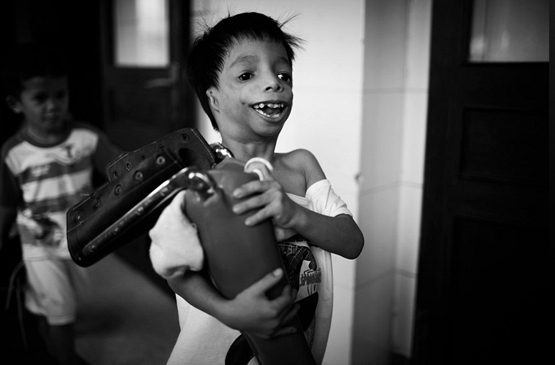
Cuando llegamos a Saigón, sabíamos que nos íbamos a encontrar con lo más duro de la guerra, pero nunca con algo tan escalofriante y atroz: el Agente Naranja. Caminando los estrechos callejones de la zona más antigua de la ciudad comenzamos a ver gente discapacitada y con malformaciones andando por las calles. Algunos mendigando, otros vendiendo libros y los más osados andando en moto a pesar de no tener ninguna de las dos pernas. Ciertos rostros eran algo similar a la idea que tenemos de un mutante. Narices gigantes que ocupaban más de media cara y con los orificios de lado, ojos que parecían chorreados y grandes inflamaciones como pelotas en las frentes y cabezas, orejas del tamaño de una moneda y dientes que crecían sin dirección alguna. Sobre una tabla con ruedas algunos andan sin piernas y un solo brazo, y otros con las extremidades retorcidas como rama de enredadera, con granos en la cara del tamaño de uvas o canicas. No teníamos en claro el porqué de toda esta gente, hasta que al segundo día de estar en la ciudad nos dirigimos al Museo de Remanentes de Guerra.

Victimas (www.forum.goregrish.com)
Al llegar al segundo piso, luego de ver aviones, tanques, helicópteros y armas, nos encontramos con algo que no esperábamos ver. Tras el vidriado de las paredes de la sala se observaban personas limpiándose las lagrimas de los ojos con las manos, mientras leían aterrorizados carteles que se encontraban en las paredes y observaban fotos que no eran del tiempo de la guerra, sino actuales. Dichas imágenes mostraban las más terribles malformaciones de seres humanos que sin siquiera haber vivido durante esos años, hoy sufren las consecuencias de una guerra que parece no tener fin.

Victimas (www.forum.goregrish.com)
Rompiendo tratados de guerra y leyes internacionales, el ejército estadounidense utilizo durante incontables ataques uno de los agentes químicos mas fuertes existentes en el planeta; el Agente Naranja. La selva era muy hostil para quienes no estaban acostumbrados a permanecer en ellas durante tanto tiempo, y a su vez hacia casi imposible localizar al Viet Cong replegado entre la densa vegetación que cubre gran parte de la península. Por otro lado el tránsito de la ruta Ho Chi Minh representaba una amenaza ante los americanos, quienes nunca pudieron cortarla por completo. Esta ruta transitaba gran parte sobre la frontera con Laos (incluso sobre territorio extranjero), y se movía siempre entre la espesa selva donde el Viet Cong era imbatible e ilocalizable. Suministros, refuerzos y tropas enteras transitaban de norte a sur por este sendero que se transformaría en una de las claves de la victoria norvietnamita. La única salida que vieron los americanos ante este terreno que se les hacia tan hostil, fue lanzar toneladas y toneladas del Agente Naranja desde aviones, un químico tan potente que destruía toda vegetación que tocaba, transformando selvas enteras en cementerios de arboles; las tierras fértiles de los valles en tierras toxicas e inutilizables; y centenares de ríos en canales que no transportaban más que veneno puro.  Pero los aldeanos no lo sabían. Seguían consumiendo de esa agua, cosechando y comiendo de su arroz y vegetales que crecían en esos campos y hasta a veces mojándose con esa lluvia de químicos que llegaba desde el cielo. Solo unos pocos cercanos a grandes ciudades tenían la información de no consumir ni agua ni cultivos de sus tierras, pero el hambre llegaba rápido, y la destrucción de caminos y fabricas hacia que rápidamente se vean desabastecidos; obligados a comer lo que tenían a su alcance. Incluso sus animales, como cerdos, gallinas y vacas, bebían esa agua y comían de ese pasto, por lo que cualquier tipo de alimento era veneno en sí mismo.

Civiles escapando (www.vintage-everyday.blogspot.com)
Las fotos retrataban gente de todas las edades; ancianos, adultos, niños y bebes con malformaciones inexplicables. Me fue imposible retener las lágrimas al leer una carta enviada por una adolescente victima del Agente Naranja al Presidente Barak Obama, reclamándole ayuda y algún tipo de contemplación para las miles de personas en Vietnam que sufren estas esquirlas tan profundas que el tiempo no sabe curar. Sus vidas se ven resumidas a la existencia absurda donde nada de lo que desean puede ser realizado. El gobierno les recomienda no estudiar, su cuerpo les imposibilita realizar actividades laborales, se les hace muy difícil hacer amigos y casi imposible encontrar pareja; sabiendo que tampoco procrear es posible para ellos, ya que sus hijos saldrán con mayores malformaciones que las de ellos mismos. Un Agente Naranja que causo y sigue causando victimas no solo en los habitantes de Vietnam del Norte, el enemigo, sino también en Vietnam del Sur, Laos y Camboya.

Caida de Saigon (www.pictureshistory.blogspot.com)
Hoy en día miles de campos siguen siendo inutilizados y los análisis de agua de los ríos siguen dando como resultado la contaminación con agentes químicos que la hacen imbebible. Cientos de niños siguen naciendo con malformaciones sin que ninguno de los responsables tome cartas en el asunto. El país entero fue devastado, la mayor parte de sus puertos destruidos, sus rutas destrozadas y fabricas demolidas por una guerra absurda como todas. Tan absurda como las palabras del general Cao Van Vien, quien firmo la orden de resistir con la frase “defender hasta la muerte, hasta el final, la porción de tierra que nos queda”, desertando horas después y huyendo del país mientras sus soldados morían sin sentido. Tan absurda que la entrada de los tanques en el Palacio de la Independencia tomo por sorpresa a los periodistas quienes no estaban en el lugar, por lo que fue repetida horas más tardes, solo para las fotos, rompiendo los mismos enrejados que habían traspasado horas atrás. Sin embargo, la sonrisa del vietnamita es algo que no pudieron borrar de sus rostros. Gente amable, gente sufrida pero con esperanzas, gente que nos sonrió y ayudó durante todo el camino; ofreciéndonos su hospitalidad y no guardando rencores ante exponer un pasaporte americano. Un país que de a poco supo levantarse y hacerle frente a esta guerra que no tiene fin; esta Guerra que aun continúa. 

Recomiendo cliquear en el link que aparece en el texto, o aquí, para leer la carta enviada al Presidente Barak Obama. Esta en ingles pero cualquier traductor puede realizar una traducción bastante cercana a la realidad.