Mostrando las entradas con la etiqueta sapa. Mostrar todas las entradas

28 ago 2012

A ROAD TRIP THROUGH NORTHERN VIETNAM - Part 2


Day 3: Thuan Chau – Dien Bien Phu: 136 km, 4 hs.

Good Morning Vietnam!
Our plan for day 3 was to cover some 140 kilometers almost to the border with Laos and spend the night in the town of Dien Bien Phu. It is known for a significant battle that took place around there in 1954 the result of which was the expulsion of the French rule over the north of Vietnam. Since we had plenty of time and a relatively short distance to cover for the day we took time stopping many places to photograph the luscious landscape that was becoming more mountainous and wooded. There were fewer villages around those parts, but every time we saw villagers they were busy with some sort of agricultural activity – gathering rice, carrying or cleaning crops on tarps spread along the road. 

Photo Lessons...
The kids often road water buffalos alongside the road or zipped around on bicycles (2-5 people on 1 bike) way too big for their size. We saw several women who were “transporting” their pigs by walking them on a leash from one place to another. Those villages, situated along the road, were obviously not isolated from the rest of the civilization, but it felt as if they were entirely self sufficient. Every household had a pond where they raised fish and eatable algae and other water plants eaten as salad. They all had cattle, chickens and cultivated their own rice. I am sure that the real situation is not that ideal, but it really felt that those people lived independently relying only on themselves and their land.

A Girl from Sapa.
By 1pm we were almost at our final destination and it was time to eat. When we set out on our trip we were told to respect Vietnamese meal times because otherwise we were not going to find places to eat. Lunch is usually eaten between 11am and 1pm after which most eating establishments close and only reopen for dinner between 6 and 8pm. This time our lunch turned out to be a full on multiple course meal culminating with traditional green tea and pipe smoking. We were hosted by an ethnic family, who did not question whether or what we wanted to eat, but just began feeding us.  Skillfully, they made sure to get our heads spinning with the rice liquor and our bellies full with the fresh deliciousness of no less than 6 dishes during a couple of hours of intense conversations through hand gestures. The whole feast ended up costing a ridiculous amount of $10 after which we could not summon up for anything except for finding a hotel and taking a 3 hour nap.  


a
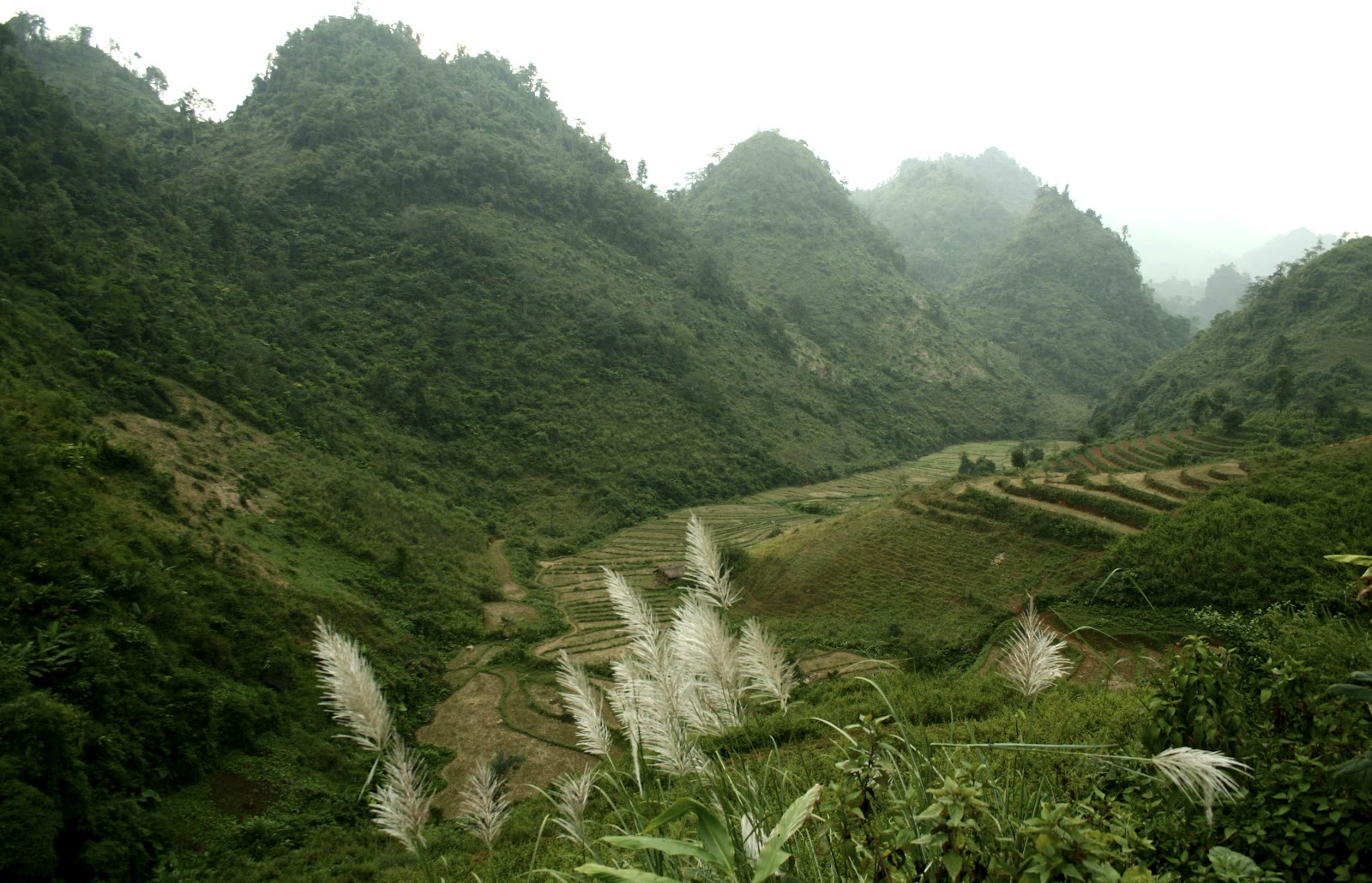
Limestone Mountains...
Day 4: Dia: Dien Bien Phu – Lai Chau: 212 km, 8 hs.

This was one of the longest days we had on a bike and I was not feeling too happy about it. As the landscapes were getting more and more stunning, my butt was getting more and more sore. We took several stops during which I had to take short naps to try to get some strength back, but it seemed that my body was refusing to take any more time on top of that thing. Emi did not feel the effects as much, but I think it was because he was the one driving, and being in control took his mind away from his pains and aches.  Thankfully, the scenery was gorgeous and diverse with plenty of things to distract ourselves with.

On Their Way to the Rice Fields.
Alongside the road we were on there was a steep wall of a limestone mountainous formation completely covered with a green carpet of voluptuous vegetation. The other side of the road dropped down to a wide turbulent river the color of milk chocolate. There were strange looking wooden boats with some sort of sheds floating in many places. Those boats, as we later found out, were gold-digging vessels that sifted through the river bottom residue in search of this precious metal. As we moved farther and farther north, we noticed that traffic almost dropped completely up there and it was almost strange to come across a random truck of another motorbike. Apparently, the north of Vietnam is less populated and people have fewer resources to contribute to long distance traffic.  

Yummm!
As always, we stopped for lunch at a place that appeared the most popular with the locals. We walked in and were immediately offered to try someone’s dish – an unknown something looking like a pile of golden French fries. Emi put one of those things into his mouth and immediately ordered that dish for our table. Little did I know that in some 5 minutes I was going to be facing a challenge of eating a plateful of giant deep-fried maggots and flies! OMG! The flies had wings and everything!  If I knew what we had ordered this would have never happened, but now, with the whole place staring at us we had to eat them… I am not picky about my food and my stomach is very strong, but I did feel it turn when I grabbed one of those crispy flies with my chop sticks. Of course I had to prove to myself, Emi and everyone else that I could do it….and I ate one fly and one maggot (yuck!!!).  They do taste like fried food and they fill you up, but I would not be eating them any time soon again.

 Just Another Day in the Mud Pool!
Our adventure for the day was not exactly over with the insect lunch. Once we finally got to Lai Chau, I was desperate for a shower and a bed. We found a beautiful room at a family hotel and were ready to settle in when the owner asked us for our passports to register. 5 minutes later he showed up in our room telling us that we had to leave…Since no one at the place spoke English we never found out what happened and why we were being kicked out. Our only guess was that guests with US passports were not welcomed there. The north of Vietnam is still very communist and the memories of the Vietnam War are still too fresh in the older generation’s memory. In general, the Vietnamese are very friendly to anyone and we have not heard any stories about animosity towards US visitors. However, I would not be surprised if that man refused to extend his hospitality to visitors from the nation that did horrors to his homeland and his people.

Day 5: Lai Chau – Sapa – Lao Cai: 157 km, 5 hs.

Villages Around Sapa.
This day we saw some of the most beautiful landscapes and some of the ugliest manifestations of “cultural tourism”. We were now in the mountains of Vietnam and the whole way to Sapa we were climbing up the curvy mountain roads. In many places the roadside slopes were covered with a green carpet of a plant called Xuxu. It is a pear-like wrinkled green vegetable that grows on vines. The plants are grown on hillsides over some sort of an elevated wood and wire platform that supports the vines providing for space to walk underneath the growth and collect the hanging fruit. We have eaten Xuxu many times, as it turned out, but just did not know what it was. It is used for salads and stir fries and it is delicious!

An Indigenous Woman in Some Village. 
By noon we were approaching Sapa, which is a small town on top of a mountain and surrounded by countless hills ornately carved by rice terraces. In the last years it has become a very popular destination for so called “cultural tourism”, when you are offered to visit local villages and get acquainted with a traditional way of living of the native population. Predicting the crowds and the exaggerated prices we had planned to spend an afternoon in Sapa, but find accommodations for the night at a different town further down the road. As soon as we entered Sapa we were happy about our decision as the streets were flooded with white visitors and herds of indigenous locals harassing them. Most of them offered beautiful handcrafted goods or guided walking tours though the surrounding villages and elaborate rice terraces.  

Unfortunately, any interaction with the local people turned out to be negative. Emi went to the market square to look at the crafts and within seconds he was surrounded by at least 20 women shoving their crafts into his face and shouting over each other to get his attention. 
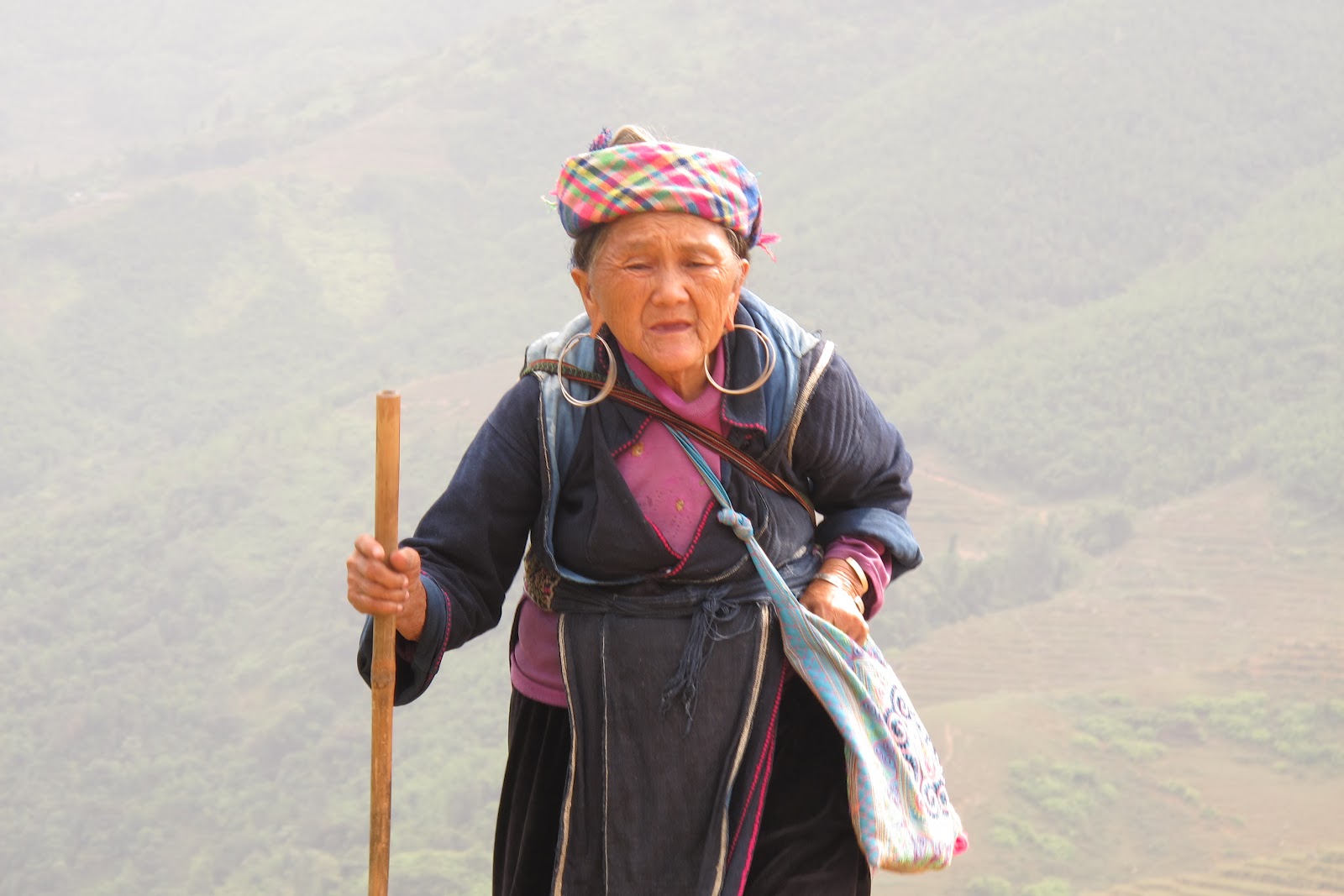
A Woman from Sapa.
The worst part was that they fought with each other and did not respect each other’s prices or priority as far as making contact with a particular tourist. It was also practically impossible to “shop around” and check out prices because as soon as you asked “How much?” you were expected to buy the thing no matter what, and if you tried to leave they physically blocked your way! This was the worst harassment I have ever experienced and it was really sad because it made you want to run from the place that is amazingly beautiful, with rich history and nice people (I am sure).  It really felt like “cultural prostitution” the way those women used their traditional clothing to get your attention and then sell you anything from what they wore or owned.

Another Indigenous Woman Selling Crafts. 
 It was very sad and unpleasant, but this is Sapa’s reality which was created by the western visitors. So we are to blame ourselves for wanting to see exotic beautiful places and people, and creating mass tourism to these places. We are the ones who change the traditional life style in places like Sapa, and now we are the ones who criticize the locals for losing their authenticity and trying to make money off of us?!

Luckily, our visit to Sapa was soothed by a visit to a small local bar with refreshing beer, super friendly owners and plenty of paint to add our contribution to the decoration of the place. Having replenished our forces and done with sightseeing for the day we left for Lao Cai, which was going to be our last stop before heading back to Hanoi.

A Village Woman somewhere before Sapa.  
Day 6: Lao Cai  - Hanoi: 354 km, 8.5 hs. 

The last day was going to be the longest day riding and the poorest one in attractions. This time, the goal was not to see things but to get to Hanoi as soon as possible and in one piece. We actually had an option to avoid driving the bike back and take a train, but that, of course, was an ungrounded extra expense for our budget. So we got up and drove… all day long! It was not particularly interesting and exciting, as we were on one of the main highway routs in the north, but because of that we saw more exciting atrocious variations on driving Vietnamese style… There were people on motorbikes carrying slaughtered pigs, cages with chickens and dogs; there were cows, buffalos and people walking on the highway; we had to swerve around a bus going backwards in our lane; but the best was a heavy-duty commercial truck parked on the actual road while the driver was having lunch.  Nevertheless, as always, we never saw one accident and no one appeared stressed about traffic.

A Perfect Turn on the Road!
By 6pm we were back in Hanoi, which met us with its usual energetic chaos. Very tired but reenergized emotionally by our new tip experiences we returned the bike, arranged a new adventure for Hallong Bay the next day, picked up our big backpacks from our old host and dripped them of at the house of our new hosts - this time 4 French university students. They were very new to Vietnam, so just like that Catalan couple, we were now the ones sharing our road stories and inspiring the newcomers not to stick to established tourist routs and get on those bikes to explore the country for themselves...

12 dic 2011

DIARIOS DE MOTONETA

Mujeres en el Camino
Cuando planeamos el viaje sabíamos muchas cosas de Sudamérica, Rusia y Estados Unidos, pero nuestros datos de Asia; más específicamente del Sudeste Asiático, eran mínimos y se reducían a algunas rutas a seguir, ciertos puntos imprescindibles, y los datos de visados que necesitaríamos o no en cada uno de los países en cuestión. Es por eso que cada vez que nos encontrábamos con alguien que ya había viajado por la zona, los llenábamos de preguntas para de a poco armarnos de una idea más precisa sobre nuestro posible itinerario. En lo que respecta a Vietnam, todos, y absolutamente todos a los que les preguntamos nos dijeron “no se pierdan el norte”. Pero de qué manera podíamos abarcar una gran zona viajando en buses? Que escalas haríamos? Es difícil a veces conocer algo diferente si no salimos un poco de estos saltos de ciudad en ciudad que representa el transporte público. Pero una pareja de catalanes nos soluciono la incógnita: “alquilen una moto”.

Fumando Tabaco
Así fue que con los cascos ajustados, alforjas cargadas, un buen mapa y piloto para lluvia bajo el asiento, pusimos en marcha la Honda 125 y esquivando vietnamitas comenzamos nuestro periplo norteño; con los ojos bien abiertos y cargados de expectativas. Nos tomo más de dos horas salir de la ciudad; si se puede decir que salimos, ya que las casas a los costados de la ruta son una constante que rara vez desaparece. Motos, camiones, bicicletas, gente caminando por las banquinas; las rutas de Vietnam son calles donde se desarrolla la vida hasta más lento que en las ciudades, a una velocidad más de pueblo: pausada y parsimoniosa. Dos veces nos cruzamos con accidentes con motos, aunque los conductores se paraban sin siquiera mancharse la camisa y volvían al ruedo sin discusiones de por medio. Pasado Hoa Binh, nos detuvimos a almorzar en un restaurante donde algunos locales tomaban sopa. Señalando sus platos ordenamos lo mismo, mientras de a poco intentábamos intercambiar algunas palabras con los otros comensales. Risas de por medio les pedimos una foto, a lo que aceptaron con mucho entusiasmo y nos pidieron que nos sentásemos a tomar el té y fumar algo de tabaco con las grandes pipas de bambú que usan en Vietnam. Era el primero de nuestros almuerzos en la ruta, el primero de tantos almuerzos inolvidables que iríamos a tener durante nuestro trayecto. Almuerzos con charlas sin sentido. Pero qué sentido tiene que tener una charla si alegra corazones? Ya bastante sentido le buscamos a la vida todo el tiempo; porque no tomarla a la absurda cada tanto?

Cosecha de Arroz en Mai Chau
Luego de 6 horas (bastante para el primer día), llegamos finalmente a Mai Chau, pequeño poblado donde nos habíamos propuesto pasar la primer noche. El pueblo vive básicamente del arroz y de las telas que venden sus mujeres a los turistas que se acercan por la villa. Mai Chau es hermoso por donde se lo mire. Casas de madera y bambú sobre altos pilotes forman las escasas edificaciones alrededor de gigantescos campos de arroz que descansan a los pies de algunos cerros. Grupos de mujeres cosechan el “oro blanco” en manojos que atan con pequeñas ramitas de la misma planta. Luego los hombres recogen estos manojos y juntándolos en grupos más grandes los transportan en sus hombros o en motos hasta sus casas en el pueblo. Con diferentes técnicas separan los granos de arroz de las espigas; algunos caminando sobre ellas, otros con rodillos manuales y los menos con maquinas a diesel, para luego ponerlos a secar a los lados del camino.

Mujeres Trabajando
El norte de Vietnam es característico por albergar la mayoría de las 54 diferentes etnias que habitan en el país y fue a partir del segundo día cuando comenzamos a distinguir muchas de ellas por los pueblos a los costados de la ruta. Las miradas curiosas desde los arrozales de mujeres de la etnia Red Dzao, un grupo de niños de la etnia White Hmong montando búfalos por el medio del camino, saludos de mujeres de la etnia Black mientras sacaban cangrejos de uno de los tantos ríos turbios que serpentea el sur de la provincia de Son La; mas y mas pobladores de grupos aborígenes que fueron capaces de resguardar sus culturas por miles y miles de años. Vestidas con sus tradicionales trajes negros con decoración en varios colores en las mangas y un pañuelo verde en las cabezas, caminaban algunas niñas de la etnia Green Hmong bajo la sombra de extensos viñedos que tapizaban las laderas de los cerros, mientras mujeres de la etnia Muong, distinguidas por sus largas polleras negras ajustadas, camisas blancas o celestes y pañuelos blancos en las cabezas sobre sus rodetes, trabajaban con sus abejas y plantaciones de té. Un bombardeo constante de ropajes de colores, peinados extravagantes y miradas que dejaban escapar cierta ternura y timidez, nos abofeteo durante las 8 horas que estuvimos sobre la moto.

Cosecha de Arroz
El tercer día nuestro trayecto sería el más corto del periplo y luego de algunas 4 horas, recorrimos los 136km que separan Thuan Chau de Dien Bien Phu, ciudad heroica en Vietnam, ya que fue allí donde en 1954, el en ese momento Vietnam del Norte, ganó finalmente la batalla más importante contra los colonos franceses, expulsándolos definitivamente de su territorio. Es quizás en este tramo donde vimos más fuerte y constante el trabajo en la ruta misma, y cuando digo en la ruta misma no me refiero a trabajos de pavimentación ni mucho menos, sino a trabajos cotidianos del campo que los pobladores desarrollan directamente en las banquinas; más específicamente, el secado de granos y otros alimentos. Sobre grandes lonas secan arroz, maíz, hongos y algunas raíces y frutas que usan para las comidas, mientras grupos de chicos vuelven en bicicleta de la escuela. Es importante destacar que durante todo nuestro viaje no vimos un solo chico trabajando, sino que siempre aparecían cerca del mediodía, con camisas blancas y pantalones o polleras azules, volviendo a casa con sus libros en los canastos de las bicis.   

180 Grados
De a poco nos acercábamos a Sapa, nuestro punto final antes de la vuelta a Hanoi, y la ruta cada vez más montañosa, no le daba respiro a la pobre Honda. El subir y bajar montañas hace que desaparezcan un poco las riquísimas etnias que coloreaban los campos en días anteriores, pero a su vez los paisajes se magnificaron al 100%. Era como si por momentos los ropajes de la gente y nuestra curiosidad por sus actividades, le dejaban espacio a los ríos y montañas para que estos puedan ser apreciados sin distracción alguna. Una pared de helechos gigantes cubre por completo la ladera de un cerro a nuestra derecha, mientras a nuestra izquierda y bajo un precipicio bastante profundo, un rio turbio color café con leche, se mueve pacíficamente y en absoluto silencio. Algunos barcos con rodillos gigantes, levantan los sedimentos del fondo lacustre en busca de oro u otros minerales. Los paisajes se sucedían uno tras otro y solo al bajar a los valles volvíamos a cruzar miradas con etnias que nos saludaban con sonrisas al grito de “hello”. Fueron dos días con los paisajes más sorprendentes por las provincias de Lai Chau y Lao Cai, transitando rutas de ripio bastante malas y moviéndonos entre las tinieblas que abrazaban montañas de piedra cargadas de vegetación. Tinieblas que al mediodía del 5to día nos depositaron finalmente en Sapa.

Transportando la Cosecha
Debido a la abusiva explotación turística Sapa es sin dudas la ciudad más cuidada y más bonita en el norte. A su vez, es donde las etnias perdieron un poco su esencia, comenzando incluso a hablar algo de inglés y dedicándose más al turismo que al campo en sí mismo. El acoso es permanente y sin fin sobre turistas que se acercan para preguntar un precio o simplemente para ver algo de lo que venden. Son las mujeres mismas de alguna de las cuatro principales etnias que habitan la zona (Miao, Dao Do, Tay y Giay), quienes se encargan de caminar junto a grupos de viajeros que quieren introducirse más en las increíbles e incontables terrazas de cultivo que rodean Sapa por los cuatros puntos cardinales. Son estas terrazas las que hacen de Sapa un lugar diferente.

Terrazas en Sapa
Rodeada de las montañas más altas de Vietnam, Sapa en sí, es un lugar complicado para la práctica de la agricultura debido a que no existe valle alguno y la única solución es recurrir a las terrazas de cultivo, las cuales también hicieron famosos a los Incas en el glorioso Perú. La única diferencia entre estas etnias y el antiguo imperio sudamericano, es que en Sapa, esto se sigue practicando en la actualidad y la cantidad de terrazas es algo imposible de calcular. No existe ladera que no represente estas gigantescas escalinatas cargadas de arrozales. Por otra parte, la dificultad de realizar esto con el arroz, es que este necesita ser inundado al momento de la siembra; como formando enormes piletones. De esta manera las terrazas no son solo simples escalones, sino a su vez representan una obra de ingeniería, donde de arriba hacia abajo se van llenando dichas piletas de cada nivel, rebalsando uno al otro hasta llenar de agua incluso la zona más baja de la montaña. Son diques colgantes que luego serán utilizados para el sembrado y cosecha de mucho del arroz que se consume en el país.

Etnia Miao frente a las terrazas de Sapa
Contra la lógica de un viaje al norte de Vietnam, y luego de pasar el día completo en Sapa, seguimos viaje para pasar la noche en Lao Cai, ciudad frontera con China. Durante los 34km que separan ambas ciudades el camino bordea un rio correntoso colgando de la ladera sur de las montañas y bajo la sombra de grandes y oscuros pinos. Al otro lado del cañadón es posible ver terrazas plagadas de arroz ininterrumpidamente durante todo el trayecto, sabiendo que de nuestro lado, posiblemente la ruta sea un nivel más de las infinitas escalinatas verdes. Finalmente llegamos a Lao Cai, y nos dispusimos a descansar temprano, ya que al día siguiente nos esperaba la larga vuelta de casi 340km hasta Hanoi.

Abuela de Sapa
Esta ruta, representa una de las principales vías de comercio con China, por lo que el pavimento se encuentra en mejores condiciones y sin tantas montañas, de manera que nos fue posible transitarlo con mucha mayor velocidad. Pero también fue en estos últimos kilómetros cargados de mucho mas transito, donde vimos las maniobras más extrañas y las atrocidades más grandes en cuanto a transito se refiere. Camiones yendo marcha atrás, un derrumbe que ocupaba tres cuartos de la ruta, retomes sin ningún tipo de aviso previo y vehículos estacionados directamente sobre el pavimento, mientras sus choferes almorzaban en algún restaurante al lado del camino. A eso hay que sumarle que nunca van por su carril, sino que siempre transitan ya sea por el medio o directamente de contramano. Ya ingresando en la ciudad y mientras recorríamos una autopista, una vaca caminaba libremente como si fuese parte del tránsito, mientras un grupo de motos y un colectivo lo hacían de contramano.

Bufalo
Finalmente, luego de seis días y 1264km recorridos, volvimos al punto de partida, completamente satisfechos y agradecidos por el clima que nos acompaño durante todo el trayecto, dejando caer alguna llovizna solo durante algunos minutos luego de la salida de Lao Cai. Sin dudas conocimos mucho mas de Vietnam de lo que se puede conocer sobre buses y trenes, quedando claro que de aquí en más alquilaríamos una moto siempre que nos fuese posible. Coloridos días que no olvidaremos jamás, dejando grabado en nuestro ser los saludos de los niños en bicicletas, las verdes terrazas de arrozales, los increíbles y graciosísimos almuerzos, los revolcones de los enormes búfalos en el barro y las incontables sonrisas que nos regalaba cada persona con la cual nos cruzábamos. Días donde conocimos el verdadero Vietnam, y la vida del campo de este golpeado país donde su gente es el ejemplo de la esperanza y la ilusión.